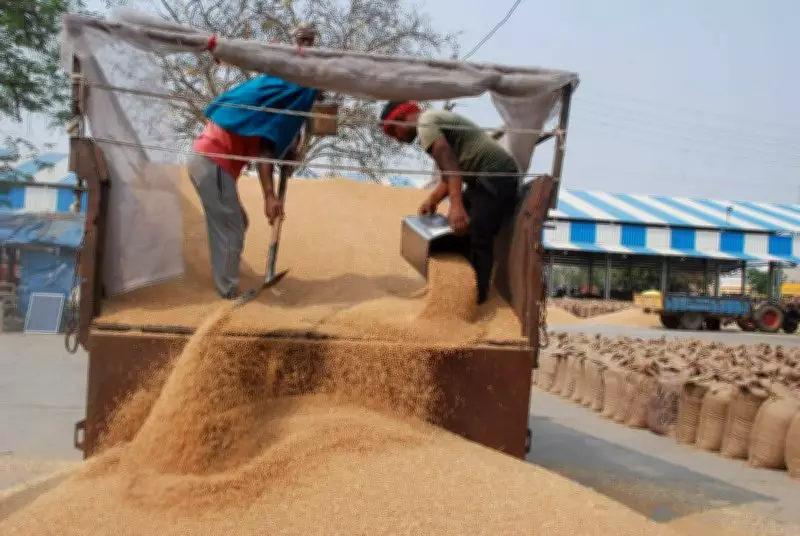
Haryana Government Unveils Major Reforms in Wheat Procurement to Combat Fraud
The Haryana government is set to implement significant reforms in the wheat procurement process for the upcoming rabi season. These changes are a direct response to alleged irregularities uncovered during the last paddy procurement season, where issues such as fake gate passes and proxy procurement were reported. The reforms aim to enhance transparency, accountability, and digital monitoring in the agricultural sector.
Key Reforms Being Introduced
Authorities have outlined a series of measures designed to overhaul the procurement system. Farmers will be required to bring grain in vehicles with visible registration numbers on the front side. At the entry gate, a photograph of the vehicle with its number plate will be captured before issuing a gate pass. Additionally, farmers must undergo biometric verification prior to auction, and they can nominate up to three representatives if they are unable to be present in person.
Gate passes will only be generated between 6 am and 8 pm to regulate crop arrivals. For exit passes, transporters must keep GPS active on their trucks, and geo-fencing may be introduced to verify truck locations before gate pass issuance. Employees and inspectors of the Haryana State Agricultural Marketing Board (HSAMB) will be assigned unique IDs, and the entire process will be managed through a dedicated mobile app.

What Prompted the Government to Introduce Reforms?
The reforms are a direct response to widespread irregularities in the paddy procurement last season. Investigations revealed that fake gate passes were issued, enabling proxy procurement where paddy from other states, such as Uttar Pradesh, was shown as local produce. This allowed exploitation of Haryana's higher Minimum Support Price (MSP) and better payment mechanisms, leading to financial losses and undermining system credibility. In Karnal alone, six FIRs were registered, implicating over 25 officials, millers, and middlemen, with similar cases in other districts.
How Will Biometric Verification Help?
Biometric verification ensures that only genuine farmers or their nominated representatives can sell crops. This measure directly addresses the issue of proxy procurement, where outsiders used fake gate passes to sell grains without actual arrival in grain markets. By linking procurement to biometric identity, the government aims to eliminate impersonation and fraudulent claims, thereby restoring trust in the system.
Why Are Number Plates on Tractors Being Made Mandatory?
During the paddy season, fake gate passes were issued without proper vehicle verification. By mandating number plates and photographing vehicles at entry points, authorities can cross-check records to ensure that gate passes correspond to actual vehicles carrying grain. This adds another layer of accountability and prevents manipulation of procurement records.
What Role Will Technology Play in the New System?
Technology is central to these reforms. From GPS-enabled trucks to geo-fencing, digital monitoring will track crop movement in real time. The mobile app will integrate gate pass issuance, biometric verification, and official IDs, creating a strong digital trail. Officials believe this foolproof system will close loopholes and make the procurement process transparent and efficient.
What About Transporters?
Transporters must keep GPS active on trucks, and geo-fencing may be introduced to verify their locations. This prevents diversion of grain and ensures that crops reach designated godowns, enhancing overall supply chain integrity.
How Will the New System Fix Accountability of Officials?
Officials will be assigned unique IDs and must log into the mobile app. Digital monitoring ensures accountability by allowing responsibility to be traced back to specific officials in case of irregularities. According to Mukesh Kumar, District Food Supplies Controller, the new system will help ensure transparency in procurement and hold officials accountable for any misconduct.

What Happened During the Last Paddy Procurement Season?
The last season witnessed widespread irregularities, including the issuance of fake gate passes that allowed proxy procurement of paddy from other states. Millers and middlemen imported paddy from Uttar Pradesh and other states, then used fake passes to show it as local produce. This distorted procurement records, inflated figures, and exploited Haryana's higher MSP and payment mechanisms, shaking confidence in the system and prompting urgent reforms.
Are Farmers Supportive of the Reforms?
Farmers may initially find the reforms challenging to comply with, especially regarding biometric verification and fixed timings. However, many acknowledge that stricter norms are necessary to prevent fraud. The government has assured that training and awareness programs will be conducted to help farmers adapt smoothly to the new system.
What Is the Government's Larger Objective?
The larger objective is to restore credibility in procurement, protect farmers, and ensure responsible use of public funds. By tightening norms, the government signals its commitment to transparency and accountability, aiming to build a more robust and trustworthy agricultural procurement framework in Haryana.