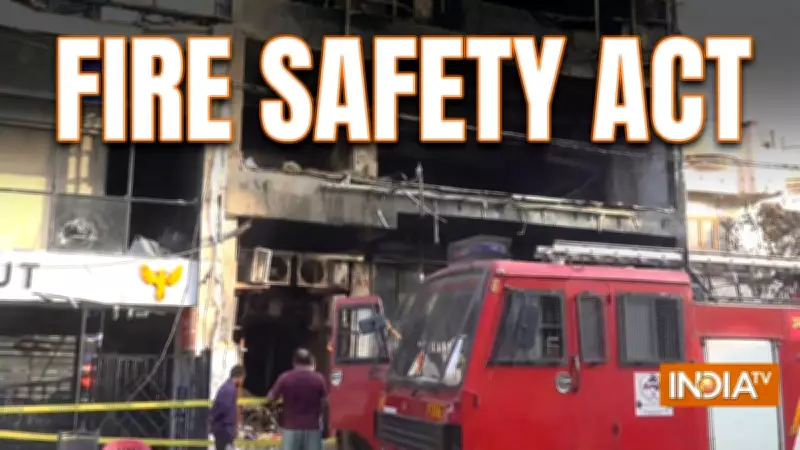
Fire Safety Act: Mandatory Compliance for High-Risk Buildings
The Fire Safety Act, enforced by the National Disaster Management Authority (NDMA), requires all coaching centres, hotels, and hospitals to implement stringent fire safety measures. The act was revised following the 2024 Surat coaching centre fire that killed 22 students. According to NDMA guidelines, buildings with more than 50 occupants must install automatic fire alarm systems and sprinklers. Failure to comply can result in fines up to ₹5 lakh or closure of the facility.
Key Requirements for Coaching Centres
Coaching centres with a capacity of over 50 students must have at least two emergency exits, fire extinguishers on every floor, and a fire drill conducted every six months. The building must also have a fire-resistant staircase and a public address system for evacuation. In a statement, NDMA chief Rajesh Kumar said, "Coaching centres are high-risk due to dense occupancy; compliance is non-negotiable."
Hotels and Hospitals: Stringent Norms
Hotels and hospitals must install smoke detectors in all rooms and corridors, along with a central fire alarm system. Hospitals, especially those with ICU and operation theatres, need a backup power supply for fire safety equipment. Hotels must display evacuation maps in each room. The act also mandates annual fire safety audits by certified agencies. According to the Ministry of Home Affairs, 60% of fire deaths in 2025 occurred in commercial buildings, highlighting the need for stricter enforcement.

Penalties and Enforcement
Non-compliance can lead to immediate closure of the establishment and a fine ranging from ₹1 lakh to ₹5 lakh. Repeat offenders face imprisonment up to three years. Local fire departments are responsible for inspections, and citizens can report violations via a toll-free helpline. The act also requires all new buildings to obtain a fire safety clearance before occupancy.
Recent Tragedies Prompt Stricter Laws
The 2024 Surat coaching centre fire and the 2025 Delhi hotel fire, which killed 15 people, prompted the government to fast-track the act. The act now includes provisions for real-time monitoring of fire safety equipment via IoT sensors. As of June 2026, over 10,000 coaching centres have been inspected, and 1,200 have been fined for violations.