

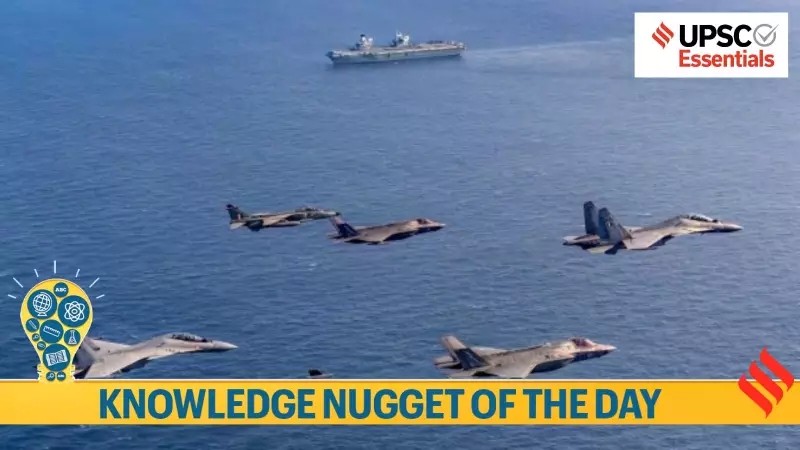
In a significant display of military readiness and strategic coordination, the Indian Armed Forces recently concluded Exercise Trishul, a comprehensive multi-domain military drill conducted in the challenging high-altitude regions along the northern borders. This tri-service exercise represents a crucial step in strengthening India's defence capabilities in sensitive border areas.
What Makes Exercise Trishul Strategically Important?
Exercise Trishul stands out as a landmark military initiative for several compelling reasons:
- Tri-Service Integration: The exercise successfully brought together elements from the Indian Army, Air Force, and Navy, demonstrating seamless coordination between different military branches
- High-Altitude Focus: Conducted in mountainous terrain similar to the Line of Actual Control (LAC), the drill tested operational capabilities in extreme weather conditions
- Multi-Domain Operations: The exercise incorporated land, air, and cyber domains, reflecting modern warfare requirements
- Rapid Deployment Testing: Forces demonstrated quick mobilization and deployment capabilities in sensitive border regions
Key Objectives and Operational Highlights
The primary goals of Exercise Trishul centered around enhancing operational readiness and inter-service coordination:

- Joint Operational Planning: Developing synchronized strategies among army, air force, and naval components
- Technology Integration: Testing advanced surveillance systems, communication equipment, and modern weapon platforms
- Logistical Challenges: Overcoming supply chain and maintenance issues in high-altitude environments
- Inter-Service Communication: Establishing robust command and control structures across different military branches
Why This Matters for UPSC Aspirants
For civil service examination candidates, understanding Exercise Trishul provides crucial insights into:
National Security Architecture: The exercise demonstrates India's evolving defence strategy and preparedness levels. It highlights the importance of jointness among armed forces, a key aspect of military modernization.
Border Management: With ongoing tensions along the northern frontiers, such exercises underscore India's commitment to securing its territorial integrity. The operational readiness displayed sends a strong message about national resolve.
Defence Modernization: Exercise Trishul showcases the integration of new technologies and tactics, reflecting the changing nature of warfare and India's adaptation to contemporary security challenges.
Broader Strategic Implications
The successful execution of Exercise Trishul reinforces India's position as a capable military power in the region. It demonstrates the country's ability to conduct complex operations in challenging terrain while maintaining operational secrecy and strategic surprise.
For UPSC preparation, such military exercises offer valuable case studies in defence policy, national security strategy, and international relations. They provide concrete examples of how theoretical concepts in security studies translate into practical military operations.
As India continues to face complex security challenges, exercises like Trishul play a vital role in maintaining deterrence and ensuring territorial sovereignty. They represent the continuous evolution of India's defence preparedness in an increasingly volatile geopolitical landscape.






