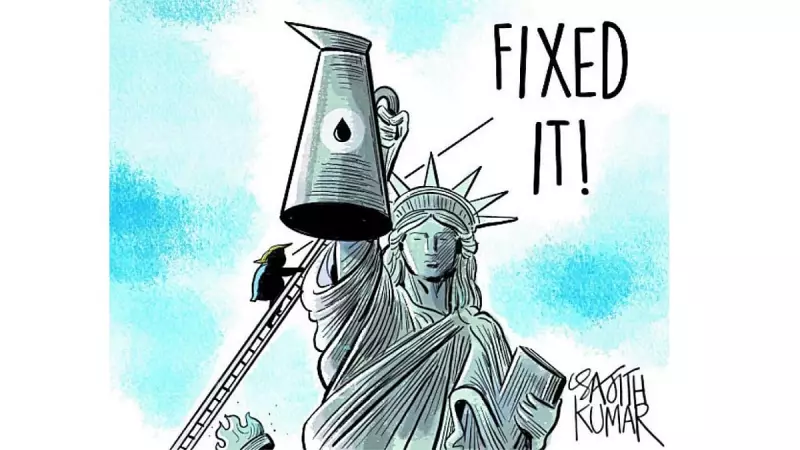
A recent editorial cartoon published by Deccan Herald has sparked conversation by offering a sharp, visual critique of a familiar phenomenon in India's public service and bureaucratic landscape. The cartoon, succinctly titled "DH Toon: Fixed It," uses satire to highlight the often superficial or problematic ways in which authorities claim to resolve public grievances and infrastructure issues.
The Satirical Lens on "Problem-Solving"
The cartoonist employs classic visual wit to comment on the "fixed it" culture. This term has become colloquial shorthand for solutions that are either temporary, cosmetic, or ultimately ineffective, yet are presented as complete resolutions. The artwork likely depicts a common urban or civic scenario where a glaring problem receives a response that misses the point or creates a new issue, a theme highly relatable to citizens across Indian cities.
While the specific visual details are from the original cartoon, the sentiment it captures is universal. It speaks to experiences like a massive pothole being "fixed" with a negligible sprinkle of gravel, or a broken public tap being addressed by placing a warning sign instead of conducting a proper repair. The humor is rooted in the shared frustration of the public, making the cartoon a powerful form of social commentary.

Beyond the Laugh: A Critique of Accountability
The brilliance of such editorial cartoons lies in their ability to move beyond mere comedy. "DH Toon: Fixed It" is not just a joke; it is a critique of accountability, or the lack thereof, in public systems. It questions the efficiency and intent behind administrative actions. By highlighting the absurdity of certain "fixes," the cartoon indirectly calls for more durable, thoughtful, and citizen-centric solutions from governing bodies and utility providers.
This form of satire plays a crucial role in a democratic society. It holds up a mirror to those in power, using art and irony to communicate public dissent and observation in a manner that is often more impactful than plain text. The cartoon serves as a reminder that the public is observant and critical of performative or substandard work.
Public Resonance and the Role of Media
The publication of this cartoon by a major newspaper like Deccan Herald underscores the media's role in channeling public sentiment. Editorial cartoons are a timeless and potent feature of newspapers, condensing complex issues into an instantly understandable and shareable image. This particular toon resonates because it validates a common experience—the feeling of being pacified with a half-measure rather than served with a genuine solution.
In the broader context, this piece of satire touches on themes of governance, civic responsibility, and public utility management. It comments on the gap between official claims of problem-resolution and the ground reality witnessed by citizens. The "fixed it" culture, as mocked in the cartoon, can erode public trust over time when promises of repair and maintenance are not substantiated by lasting results.
Ultimately, the "DH Toon: Fixed It" is more than a daily comic strip; it is a cultural artifact reflecting contemporary urban Indian life. It uses humor as a weapon to critique laxity and champion the need for more sincere and effective public service. By sparking a knowing chuckle or a nod of agreement among its readers, it successfully initiates a silent yet powerful dialogue about the standards of public administration and our collective right to demand better.