In a significant victory for grassroots resistance, the district administration in Chhattisgarh's Raigarh has cancelled the results of a crucial public hearing for a proposed coal mine, following weeks of intense protests that turned violent over the weekend. The decision comes as a direct response to the unwavering demand of thousands of villagers from 14 villages in the Tamnar block, who have been steadfastly opposing the acquisition of their agricultural land for the project.
From Peaceful Sit-in to Violent Clashes
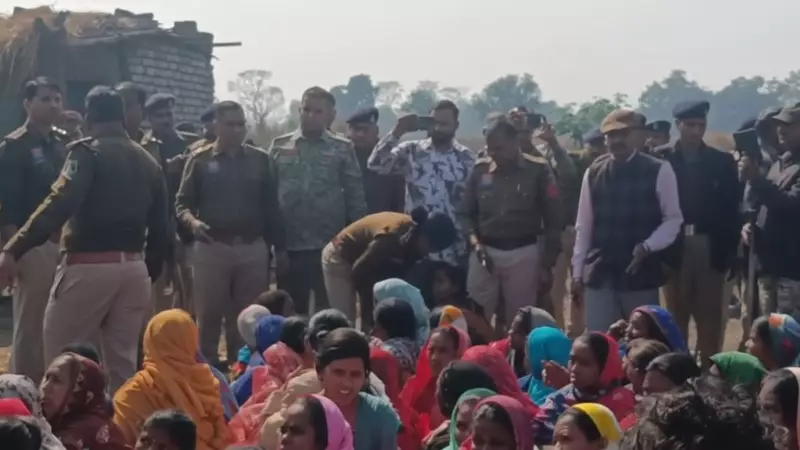
The protest, which began as a peaceful sit-in on December 12, escalated dramatically on Saturday, December 28. The situation turned volatile when police attempted to remove around 50 women protestors who were blocking mining-related vehicles at the Cold Handling Plant Chowk in Libra village. As police started taking the women off the road, it incited anger among the gathered villagers.
Soon, a mob of over 4,000 people overwhelmed the police presence at the spot. The crowd went on a rampage, setting fire to three vehicles and engaging in violent clashes with police personnel. The confrontation left two senior police officers seriously injured, according to official statements.

Administration Bends, Cancels Hearing
In a swift development the next day, Sunday, December 29, the district administration conceded to one of the protestors' primary demands. Following a meeting with village representatives, Sub Divisional Magistrate Durga Prasad Adhikari announced the commencement of the process to cancel the results of the December 8 public hearing.
"We have had an initial-level discussion with all the village delegations, and we have now begun the process of cancellation," Adhikari stated. He appealed to the villagers to maintain peace and assured them that their demands were being respected. District Collector Mayank Chaturvedi had earlier defended the hearing, claiming it was comprehensive and that a majority of the 26 participants were in favour of environmental clearance.
"Our Land is Our Identity": The Villagers' Stance
At the heart of the conflict is the fierce attachment of the villagers to their ancestral land and their fear of losing their only source of livelihood. The proposed project is an open-cast-cum-underground coal mine spread across 3,020 hectares with a planned production capacity of 15 million tonnes per annum (MTPA).
"I am an ordinary woman. I fear for my children," said Kamla Patel from Jhikabahal village. "We have some acres of land and farm rice once a year due to water scarcity. Our demand is for the cancellation of the public hearing. We do not want to sell the land at all."
Echoing this sentiment, Murlidhar Nayank (42) from Aamgaon highlighted the environmental concerns and livelihood crisis. "Over 90% are skilled farmers who are dependent on it. We don't have many options for livelihood; we do not have other skills," he said. Another resident, who wished to remain anonymous, asserted, "I will not give up my land at any cost. It's our identity. The ones who lose land have nowhere to go. It's our ancestral land."
Official Responses and the Road Ahead
Reacting to the violence, Chhattisgarh Chief Minister Vishnu Deo Sai promised an inquiry into the incident, stating action would be taken against those found guilty. The district administration had previously outlined a compensation package for affected villagers, including monetary compensation, a job for one family member, and an alternate place of residence.
The Jindal Group, which was awarded the project through an auction, maintained its commitment to dialogue. Pradeep Tandon, President of Jindal Steel, said, "A comprehensive and fair compensation package is being extended... and we will continue constructive engagement with local residents to address their concerns and ensure a mutually acceptable and peaceful resolution." He clarified that land acquisition would occur slowly over 30-40 years as mining activities are undertaken in phases.

The cancellation of the public hearing marks a pivotal moment in this conflict, but the future of the project remains uncertain as the company plans further engagement and the villagers stand firm on their refusal to part with their land.