From Personal History to National Movement: Bezwada Wilson's Journey
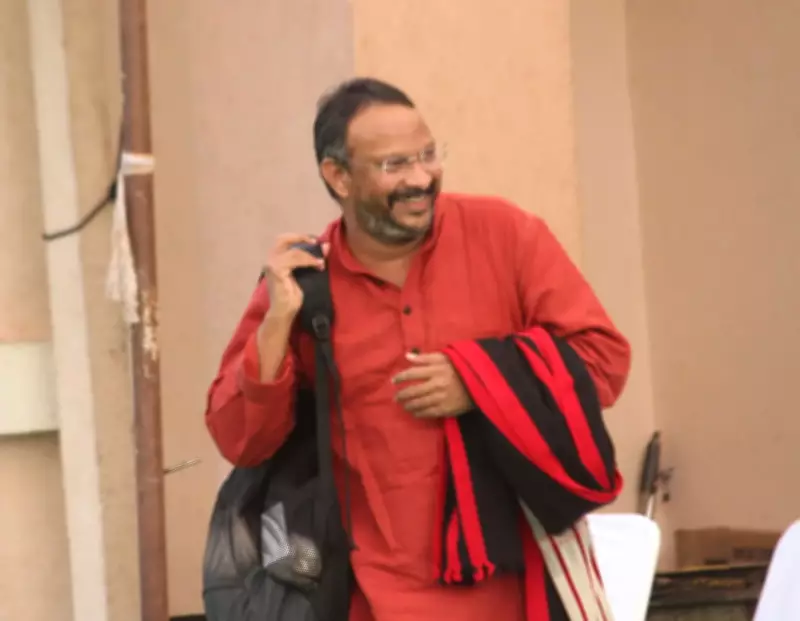
Before Bezwada Wilson became synonymous with one of India's most challenging battles for human dignity, he was a young boy growing up within the very system he would later confront. Born into a Dalit family in Kolar Gold Fields, Karnataka, Wilson came from generations directly affected by manual scavenging—the degrading practice of cleaning, carrying, and disposing of human excreta from dry latrines and sewers by hand.
What began as a painful family legacy evolved into a profound moral rebellion for Wilson. He dedicated decades to challenging an occupation that persists not because it remains hidden from view, but because society has normalized it through caste-based discrimination and social indifference.
Turning Private Pain Into Public Protest
Wilson's activism did not originate in courtrooms or government offices, but in personal confrontation—first within his own family and community, then expanding to challenge state authorities. Official records trace his organized campaign back to 1986, when he began systematically challenging the practice of manual scavenging and pressuring authorities to take meaningful action.

The Safai Karmachari Andolan, the movement Wilson helped build, emphasizes that the struggle began with youth from affected communities who had witnessed the injustice throughout their lives. This grassroots origin proved crucial because manual scavenging represents more than just an occupation—it constitutes a caste-bound humiliation passed down through generations, embedding discrimination within India's social fabric.
The Movement That Could Not Be Contained
Wilson co-founded the Safai Karmachari Andolan in 1994, developing a strategy as significant as the outrage that fueled it. The movement meticulously documented the existence of dry latrines, organized affected workers, and pushed the issue into public consciousness through sustained campaigns, comprehensive surveys, and strategic legal action.
A government social inclusion report notes that Wilson's movement filed a landmark public interest litigation in the Supreme Court in 2003, seeking both the eradication of dry latrines and official recognition that manual scavenging violates fundamental human rights. This legal pressure proved instrumental in transforming the issue from a neglected social evil into a legitimate national policy concern demanding governmental attention.
From Forbidden Practice to National Legislation
While India had previously attempted to ban manual scavenging, the decisive breakthrough came with the Prohibition of Employment as Manual Scavengers and their Rehabilitation Act of 2013. This comprehensive legislation, published in the official India Code, explicitly prohibited employment as manual scavengers while establishing mechanisms for worker rehabilitation and family support.
The central government formally notified December 6, 2013, as the date the Act came into force. This legislative milestone represented the culmination of decades of advocacy, transforming what Wilson and fellow activists had long argued was a human rights violation into codified national law.
This legal shift did not immediately eliminate the practice, but it fundamentally changed the framework for addressing it. The Ministry of Social Justice and Empowerment has since framed the issue around elimination and rehabilitation, conducting surveys to identify manual scavengers and support their transition to dignified livelihoods. The crucial achievement was not overnight eradication, but forcing the nation to acknowledge a reality it had long pretended did not exist.
The Power of Clear Messaging and Recognition
Wilson's national impact stemmed partly from the clarity of his message. He did not request sympathy for a marginalized occupation, but demanded that India confront a system where human beings were still compelled to handle others' waste by hand due to caste-based discrimination.
The Ramon Magsaysay Award recognized Wilson in 2016 for his work eradicating the degrading practice of manual scavenging among India's Dalits. This prestigious recognition helped elevate the issue beyond activist circles, establishing Wilson not merely as a campaigner but as the face of a movement insisting that sanitation cannot be built upon human humiliation.

Enduring Significance and Lasting Legacy
Manual scavenging discussions often focus on statistics, legislation, and government schemes, but Wilson's fundamental contribution was making the nation see the human beings behind the numbers. He transformed a buried injustice into a public debate about caste, labor, and human dignity, providing the movement with something many campaigns never achieve—a voice simultaneously rooted in lived experience and powerful enough to shift national discourse.
Wilson's legacy lies in compelling India to confront a reality it had marginalized for generations. For decades, sanitation systems quietly depended on people expected to remain invisible, cleaning waste with bare hands while society deliberately looked away. Through worker organization, governmental challenges, and strategic engagement with courts and public debate, Wilson ensured manual scavenging could no longer be dismissed as an isolated problem.
The subsequent legislation, national conversations, and growing emphasis on mechanized sanitation all bear the imprint of this struggle. Wilson's work stands as a powerful reminder that dignity in labor represents not merely a slogan but an urgent demand—one requiring continued vigilance until no individual in India faces the indignity of handling human waste by hand.