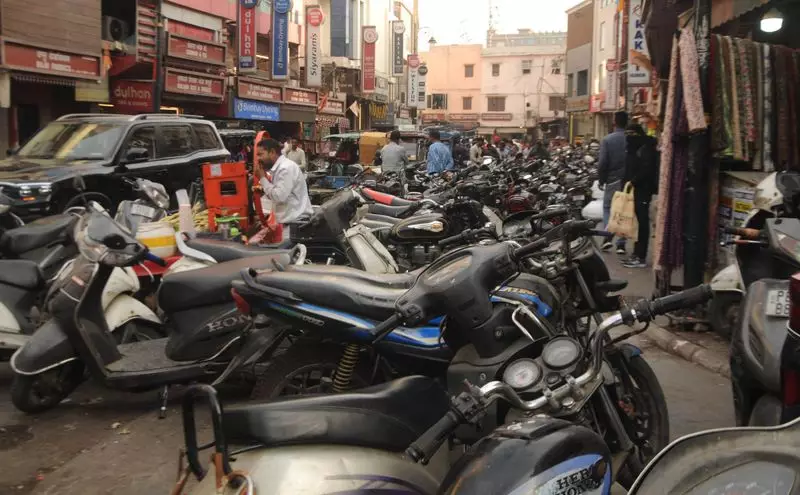
The historic city of Amritsar is grappling with an escalating parking crisis that threatens both its economic vitality and cultural heritage. As vehicles multiply and space diminishes, residents and experts are voicing urgent concerns about the city's growing inability to manage its traffic and parking demands.
Citizens Speak Out on Parking Woes
During an open house discussion organized by Amritsar's civic authorities, residents highlighted the severity of the situation. Gurpreet Singh, a local shopkeeper from Lawrence Road, described how illegal parking directly impacts his business. "Customers cannot find parking spaces near my store," he explained. "They either park illegally and receive traffic challans, or they simply avoid coming to this area altogether."
The problem extends beyond commercial areas to residential neighborhoods. Rohit, a resident of Ranjit Avenue, pointed out that even residential streets have become parking lots. "Our colony roads are so clogged with parked vehicles that emergency vehicles like ambulances and fire trucks would struggle to reach us during crises," he warned.

Expert Recommendations for Sustainable Solutions
Urban planning experts and concerned citizens have proposed multiple strategies to address Amritsar's parking nightmare. Dr. Ravinder Singh Tina, an associate professor at Guru Nanak Dev University, emphasized the need for a comprehensive approach. "We require a multi-pronged strategy that includes creating adequate parking infrastructure while simultaneously improving public transportation systems," he stated.
The most frequently suggested solution involves developing multi-level parking facilities in high-density areas. These structures could significantly increase parking capacity without consuming additional horizontal space in the already crowded city center.
Another critical recommendation focuses on enhancing public transportation. Many participants argued that improving bus services and creating dedicated lanes could reduce private vehicle dependency. "If we had reliable, comfortable public transport, fewer people would insist on driving their personal vehicles into congested areas," noted one resident.
Enforcement and Smart Parking Technologies
Beyond infrastructure improvements, participants stressed the importance of stricter enforcement of parking regulations. Currently, illegal parking remains rampant due to inadequate monitoring and penalties. Implementing consistent enforcement could immediately improve traffic flow in problematic areas.
Technology also emerged as a potential game-changer. Several speakers suggested implementing smart parking systems that would allow drivers to locate available parking spots through mobile applications. Such systems could reduce the time vehicles spend circling blocks searching for parking, thereby decreasing overall congestion.
Additionally, the discussion touched upon parking fees as a demand management tool. By implementing variable pricing based on location and time, the city could encourage more efficient use of available parking spaces while generating revenue for further improvements.
The consensus among participants was clear: Amritsar needs immediate and coordinated action to prevent its parking problems from escalating further. As one resident summarized, "This isn't just about convenience—it's about ensuring our city remains accessible, safe, and economically vibrant for generations to come."