Parliament Descends Into Chaos Over President's VB-G RAM G Act Remarks
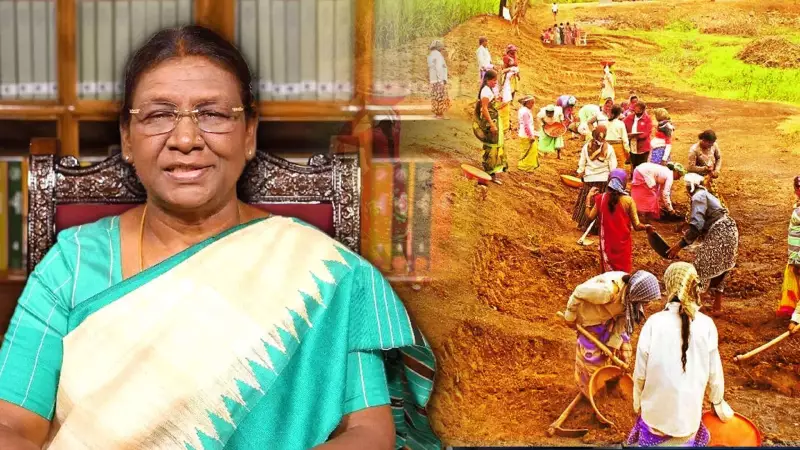
President Droupadi Murmu's address to Parliament on January 28, 2026, ignited immediate and intense controversy when she referenced the recently enacted VB-G RAM G Act. The mere mention of this legislation triggered a wave of protests from Opposition members, who vehemently accused the government of systematically dismantling the longstanding MGNREGA framework and, in the process, erasing the legacy of Mahatma Gandhi.
Opposition Outcry and Accusations of an Anti-Poor Agenda
The parliamentary session was swiftly disrupted as Opposition MPs rose in protest, labeling the new Act as fundamentally anti-poor and politically motivated. Their core argument centered on the belief that replacing the UPA-era Mahatma Gandhi National Rural Employment Guarantee Act with this new model represents a direct assault on a critical social safety net for India's rural population.
- Opposition leaders argued the move strips away the demand-driven employment guarantee.
- They claimed it undermines decades of rural development policy.
- The emotional charge included accusations of disrespecting Gandhian principles of village self-reliance.
Government's Defense: A Bold Step in Rural Reform
In stark contrast, the ruling NDA coalition and its supporters hailed President Murmu's address and the Act itself as a bold and necessary reform. They championed the VB-G RAM G Act as a modernized, efficient system designed to guarantee 125 days of employment annually through a pre-planned, project-based model.

- Proponents argue the new model will reduce administrative delays and corruption.
- They state it ensures more predictable and productive work in rural areas.
- The government frames it as an upgrade from the previous scheme, not an elimination.
Background of the Controversial Legislation
The VB-G RAM G Act was passed in the previous parliamentary session amidst significant protests and walkouts. It fundamentally overhauls the rural employment landscape by shifting from MGNREGA's open-ended guarantee to a planned employment calendar linked to specific local infrastructure and development projects. This legislative change has become a central flashpoint in Indian politics, symbolizing the deep ideological divide on welfare economics.
The timing of this eruption, as the crucial Budget Session gets underway, guarantees that the debate over rural employment, fiscal priorities, and social justice will dominate the political discourse. The confrontation sets the stage for intense negotiations and further disruptions as both sides dig in on an issue that touches the lives of millions of Indians.