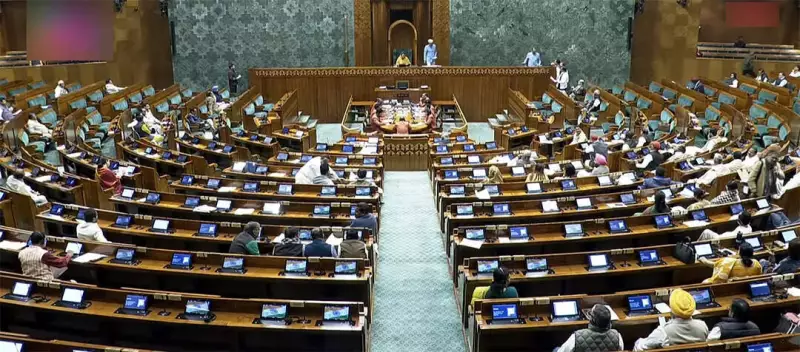
A key parliamentary committee examining a significant constitutional amendment bill has taken a conciliatory step, reaching out to opposition parties who are boycotting its proceedings. The panel is scrutinizing a proposal that mandates the removal of the Prime Minister, Chief Ministers, and ministers if they are detained for 30 consecutive days on serious criminal charges.
Unanimous Call for Opposition's Suggestions
During its first meeting on Thursday, the Joint Parliamentary Committee (JPC), headed by BJP MP Aparajita Sarangi, unanimously agreed to formally request input from opposition parties. Major parties like the Congress, SP, TMC, and DMK have refused to join the panel, protesting that the proposed law could be misused to target state governments for political reasons.
According to sources, all members of the committee concurred on the broader objective of "decriminalisation of politics." Chairperson Sarangi stated that the panel is committed to ensuring a "wide-ranging discussion" with all relevant stakeholders. To achieve this, the committee plans to visit various states and engage with opposition leaders, constitutional experts, and lawyers' bodies.

Opposition Concerns and Legal Scrutiny
The opposition's apprehensions were voiced during the meeting by AIMIM MP Asaduddin Owaisi. He cited existing criminal laws to argue against the bill's provisions. Specifically, he referenced BNS Section 187, which permits the detention of an accused for up to 90 days, and the stringent Prevention of Money Laundering Act (PMLA). His argument highlighted potential conflicts and the extended detention periods allowed under current statutes.
The core of the opposition's boycott stems from the fear that the bill could become a tool for political vendetta, especially against chief ministers of states ruled by parties opposed to the central government.
Parallel Discussion on 'One Nation, One Election'
In a related development, a separate JPC examining the constitutional amendment bill for simultaneous Lok Sabha and assembly elections also met on Thursday. Law Commission chairperson Dinesh Maheshwari, a former Supreme Court judge, endorsed the proposed law. He rejected the contention that it violates the basic structure of the Constitution or the principles of federalism.
However, opposition MPs, including Congress's Priyanka Gandhi Vadra, raised pointed questions about its provisions. The Law Commission is expected to submit its detailed views on the queries raised by the committee members. Furthermore, the panel has scheduled sessions with a diverse group of experts, including the Election Commission, former CJI BR Gavai, lawyer Kapil Sibal, and economists Gita Gopinath and Sanjeev Sanyal.
The move by the first JPC to solicit suggestions from boycotting parties indicates an attempt to build a broader consensus on the contentious issue of decriminalizing politics, even as deep political divisions persist over the methodology and potential implications of the proposed law.