Opposition MPs Stage Protest in Parliament Complex Over West Asia Conflict
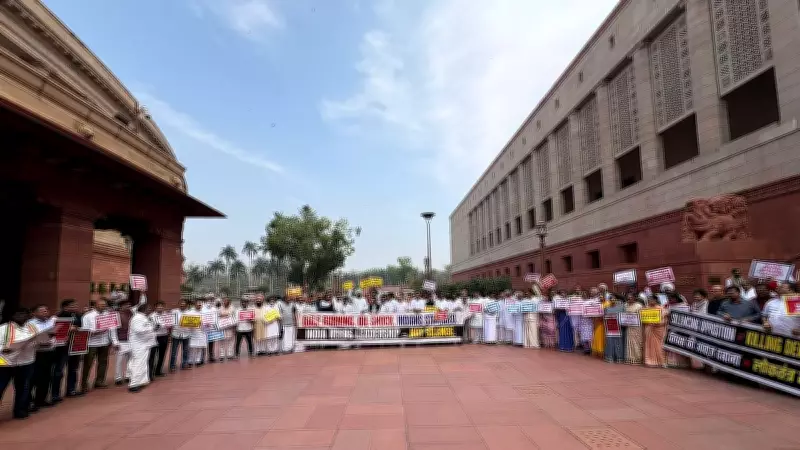
In a significant development, opposition Members of Parliament (MPs) staged a protest within the Parliament complex, vociferously demanding a comprehensive and full-fledged debate on the escalating conflict in West Asia. This move underscores the growing political pressure on the government to address the volatile situation in the region, which has far-reaching implications for global stability and India's foreign policy.
Demand for Parliamentary Debate Intensifies
The protest, organized by opposition MPs, highlighted their insistence on a thorough parliamentary discussion regarding the West Asia conflict. Lawmakers argued that the ongoing hostilities, marked by violence and humanitarian crises, necessitate immediate attention and a clear stance from the Indian government. They emphasized that a debate would allow for a detailed examination of the conflict's impact on regional security, international relations, and India's strategic interests.
Key concerns raised during the protest included:

- The need for transparency in India's diplomatic efforts and humanitarian aid in conflict-affected areas.
- Potential repercussions on Indian expatriates and economic ties with West Asian nations.
- The broader implications for peace and stability in the Middle East and beyond.
Political Reactions and Government Response
The protest has sparked a wave of political reactions, with opposition leaders accusing the government of avoiding a meaningful discussion on critical international issues. They contend that Parliament, as the supreme legislative body, must engage in debates on matters of national and global importance to uphold democratic accountability.
In response, government representatives have acknowledged the gravity of the West Asia conflict but have yet to commit to a specific timeline for a parliamentary debate. Officials have reiterated India's commitment to peaceful resolution and diplomatic engagement, pointing to existing statements and actions taken in international forums.
Analysts note that this protest reflects broader tensions within Indian politics over foreign policy oversight and the role of Parliament in shaping diplomatic narratives. The demand for a debate is seen as a test of the government's willingness to engage with opposition viewpoints on sensitive geopolitical matters.
Implications for India's Foreign Policy
The escalating conflict in West Asia poses significant challenges for India's foreign policy, given the country's substantial economic and diaspora interests in the region. A parliamentary debate could provide a platform to assess India's stance, coordinate humanitarian efforts, and strategize on maintaining balanced relations with key stakeholders involved in the conflict.
Opposition MPs argue that without such a debate, India risks appearing passive or unclear in its approach, potentially undermining its credibility on the global stage. They call for a proactive discussion to formulate a cohesive response that aligns with India's principles of peace, non-interference, and support for international law.
As the protest gains attention, it remains to be seen whether the government will accede to the demand for a full-fledged debate, setting a precedent for how Parliament addresses complex international crises in the future.