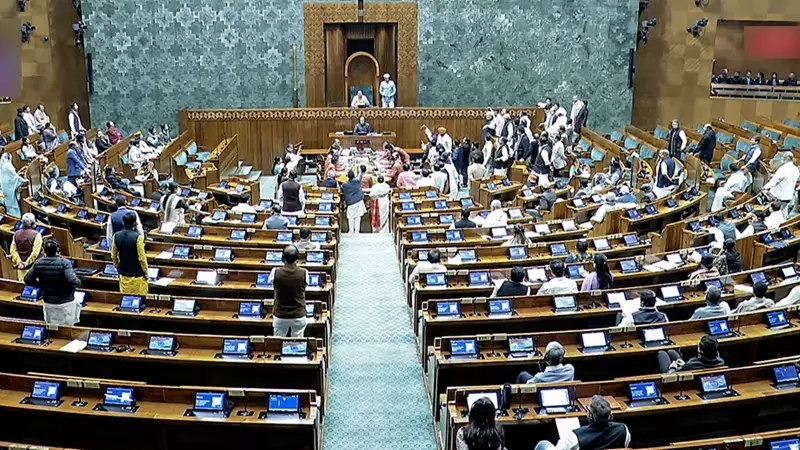
As India's shortest-ever Winter Session of Parliament draws to a close, a unique insider's account sheds light on the proceedings, government-opposition dynamics, and the state of democratic debate. Trinamool Congress MP and leader Derek O'Brien, in his parliamentary diary, offers a detailed look at the session that broke records for its brevity.
A Session of Firsts and Shortcomings
The session, noted as the briefest winter sitting in India's parliamentary history, set the tone from the very beginning. An all-party meeting convened a day before the session saw floor leaders from 36 political parties in attendance. A notable point of contention emerged when every party except the ruling BJP outlined key issues they wished to have discussed. The government's response, according to O'Brien, was the non-committal phrase, "We will get back to you," before ministers concluded the meeting after two and a half hours.
The issue of reduced parliamentary scrutiny was a recurring theme. The MP highlighted a sharp decline in the number of House sittings, from 45 days in the first Lok Sabha to just 15 days now. Furthermore, he pointed out that the admission of notices for discussion in the Rajya Sabha plummeted from 110 between 2009 and 2016 to a mere 36 between 2017 and 2024. The scrutiny of bills by parliamentary committees also saw a drastic fall, from seven out of ten bills in the 15th Lok Sabha to just two out of ten in the 17th Lok Sabha.

Protests, Protocol, and Parliamentary Conduct
The session witnessed innovative forms of protest from the opposition, particularly from O'Brien's All India Trinamool Congress (AITC). Moving beyond the usual protest site at Makar Dwar, AITC MPs staged demonstrations at various locations, including the base of Gandhi's statue, the Vijay Chowk lawns, and the steps of the old Parliament building.
One of the most symbolic protests occurred in the historic Central Hall. AITC MPs sat in silence for ten minutes, holding posters of Bankim Chandra Chattopadhyay and Rabindranath Tagore. This was a pointed response to the Prime Minister's reference to Chattopadhyay as "Bankim-da," which the party found inappropriate for the revered author of the national song.
On a positive note, O'Brien commended a gesture of parliamentary decorum from BJP's J.P. Nadda, the Leader of the House in the Rajya Sabha. Nadda "yielded" twice during his speech to allow interventions from opposition MPs, a practice the author hailed as "good parliamentary practice" and a lesson for others, including Home Minister Amit Shah.
Absences, Attentions, and Anecdotes
The diary entry also captured lighter moments and concerning trends. The author noted the absence of AAP MP and former cricketer Harbhajan Singh from the proceedings, contrasting it with the good attendance of other cricketer-turned-MPs Kirti Azad and Yusuf Pathan.
A significant procedural tool, the Calling Attention Motion, which allows the opposition to initiate a short debate on urgent issues, was not admitted a single time in either House during the session. This continued a trend that limits opportunities for the opposition to hold the government accountable on specific subjects.
Amidst the politics, O'Brien shared a heartfelt interaction with a group of students from Tamil Nadu and Jharkhand visiting Parliament. The emotional reaction of one student in the history-soaked Central Hall underscored, for the MP, the importance of young people engaging with this democratic space.
The session concluded with late-night discussions, reminiscent of the previous session. While the Manipur President's Rule was discussed until 1:00 AM in April, the debate on the MGNREGA replacement bill this session stretched until 2:00 AM, a timing the author suggests has "devious reasons."