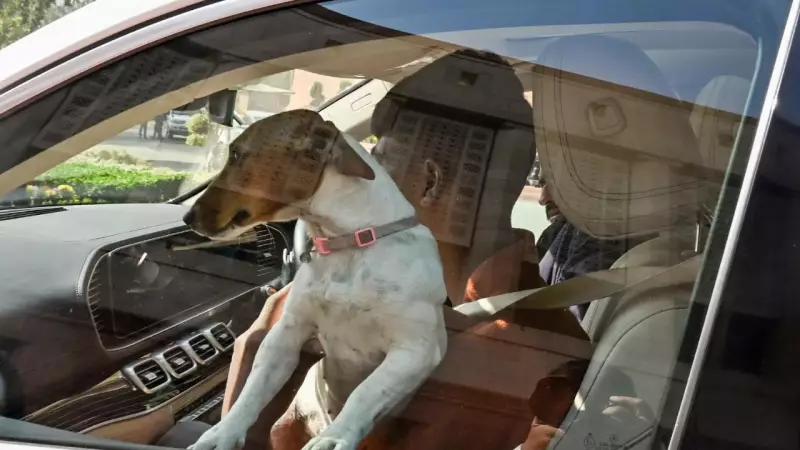
In an unusual incident that stirred both curiosity and controversy, Congress Member of Parliament Renuka Chowdhury arrived at the Parliament complex in New Delhi with a rescued stray dog in her car. The move drew sharp reactions from ruling alliance MPs, who accused her of violating protocol and indulging in theatrics.
A Canine Companion and a Political Jab
Renuka Chowdhury, a self-confessed dog lover, explained to reporters that she had rescued the stray earlier in the day and was transporting it to a veterinarian for care. Defending her action, she took a clear swipe at her political opponents. "Those sitting inside Parliament bite, dogs don't," she stated pointedly. She further claimed that the current government harbours a dislike for animals, who inherently lack a voice.
"This govt does not like animals. Animals don't have a voice. It is so small, does it look like it will bite? Those sitting inside Parliament bite, not dogs," Chowdhury told the press. She dismissed objections from some NDA MPs, asserting that there is no law against rescuing a stray dog.

Swift Political Ripostes and Accusations
The political counterattack was swift. Union minister and BJP ally Ramdas Athawale acknowledged Chowdhury's comment about people inside Parliament biting, but turned it back on the opposition. He said it was indeed opposition members who "bite and create disorder." He then delivered his characteristic poetic retort: "You keep bringing 'kutta' (dog) here and we will continue to get 'satta' (power)." Athawale added that her comments were in poor taste and she should not have brought the dog to the Parliament premises.
BJP MP Jagdambika Pal escalated the criticism, directly accusing Chowdhury of indulging in "tamasha" (theatrics) and breaching parliamentary protocol by bringing the animal onto the complex. He argued that MPs cannot bring anyone inside Parliament without proper documentation and demanded action be taken against the Congress MP for this violation.
Protocol vs. Provocation in Parliament's Shadow
The incident highlights the ongoing and often theatrical tensions within the Indian Parliament. While the act of rescuing an animal was framed by Chowdhury as a humanitarian gesture, it was immediately interpreted by the treasury benches as a political stunt designed to provoke and grab headlines. The exchange underscores how even actions outside the formal proceedings can become flashpoints for political messaging and confrontation, raising questions about parliamentary decorum and the lines of political protest.
The core facts remain: a stray dog was brought to Parliament by an opposition MP, leading to a war of words that blended animal welfare advocacy with sharp political barbs, leaving protocol officials and the public debating the appropriateness of the act.