

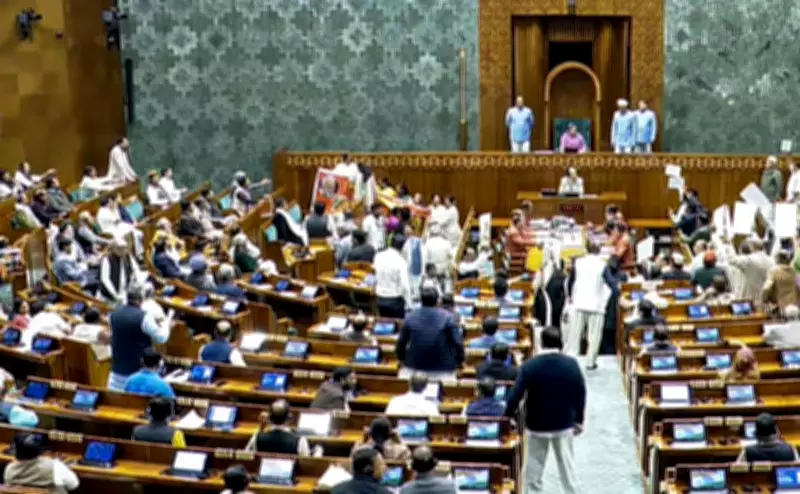
Women Opposition MPs Gherao Treasury Benches in Lok Sabha, Force Adjournment
In a dramatic turn of events in the Lok Sabha, women opposition MPs staged a forceful protest by gheraoing the treasury benches, leading to the adjournment of the House. The incident unfolded as tensions escalated over the demand for a discussion on the ongoing violence in Manipur, highlighting deep political divisions and parliamentary disruptions.
Chaotic Scenes in Parliament
The protest began when women MPs from various opposition parties, including the Congress and other allies, moved towards the treasury benches, surrounding them in a symbolic act of dissent. This move forced parliamentary proceedings to come to a halt, with Speaker Om Birla struggling to maintain order amid the chaos. The gherao, a traditional form of protest in Indian politics, was used to draw attention to the urgent need for addressing the Manipur issue, which has seen prolonged unrest and violence.
Demand for Discussion on Manipur Violence
At the heart of the protest was the opposition's persistent demand for a detailed discussion on the situation in Manipur. The women MPs argued that the government has been evading parliamentary scrutiny on this critical matter, which involves issues of ethnic conflict and human rights. By gheraoing the treasury benches, they aimed to pressure the ruling party into allowing a debate, emphasizing the gravity of the crisis and its impact on women and communities in the region.

Impact on Parliamentary Proceedings
The gherao led to significant disruptions, with the Lok Sabha being adjourned multiple times as a result. This incident underscores the growing frustration among opposition members over what they perceive as the government's reluctance to engage on sensitive topics. It also reflects broader trends of parliamentary logjams in India, where protests often overshadow legislative business, affecting governance and public discourse.
Political Reactions and Implications
Following the adjournment, political reactions were swift, with opposition leaders defending the protest as a necessary step to hold the government accountable. In contrast, treasury bench members criticized the move as undemocratic and disruptive. This event is likely to have lasting implications for parliamentary decorum and the handling of regional conflicts in future sessions, potentially influencing public opinion and electoral dynamics.
Conclusion
The gherao by women opposition MPs in the Lok Sabha serves as a stark reminder of the challenges in India's parliamentary democracy, where protests can force adjournments and highlight unresolved issues. As the debate over Manipur continues, such incidents may shape the political landscape, urging stakeholders to find constructive ways to address grievances while maintaining the integrity of parliamentary processes.






