

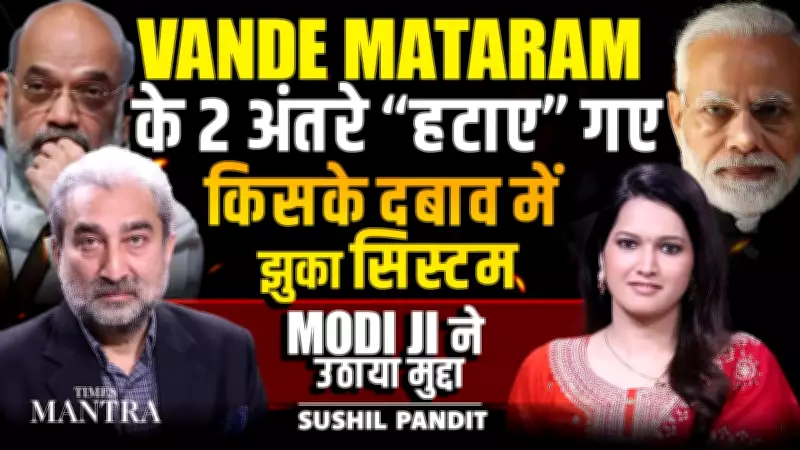
Vande Mataram Controversy: Unpacking the Historical and Political Layers
The debate surrounding Vande Mataram and the exclusion of its final two stanzas has once again ignited public discourse, with Prime Minister Narendra Modi reportedly emphasizing the historical context behind this decision. In a detailed discussion, scholar and political commentator Sushil Pandit delves into the origins of this controversy, tracing it back to pre-Independence political negotiations and sensitivities raised by certain groups.
Historical Context and Political Negotiations
The conversation explores whether the move to omit parts of the song was a matter of national consensus, constitutional practicality, or an instance of appeasement politics. Pandit explains how the controversy stems from the early 20th century, when leaders sought to balance nationalist fervor with communal harmony during the freedom movement.
Through historical references, the discussion revisits the cultural, spiritual, and nationalist significance of the complete composition written by Bankim Chandra Chattopadhyay. It highlights how Vande Mataram served as a rallying cry for independence, yet its later stanzas sparked debates over religious inclusivity.

Separating Facts from Political Narratives
This episode aims to separate facts from political narratives by examining ideological perspectives. It invites viewers to understand the layered history of the national song and the ongoing debates that shape its public rendition today. Key points include:
- The role of appeasement politics in the decision-making process.
- The constitutional and practical considerations behind adopting only the first two stanzas as the national song.
- The enduring cultural heritage and patriotism associated with Vande Mataram in Indian nationalism.
By analyzing these elements, the discussion provides a comprehensive view of how historical events continue to influence contemporary political discourse around national symbols.






