

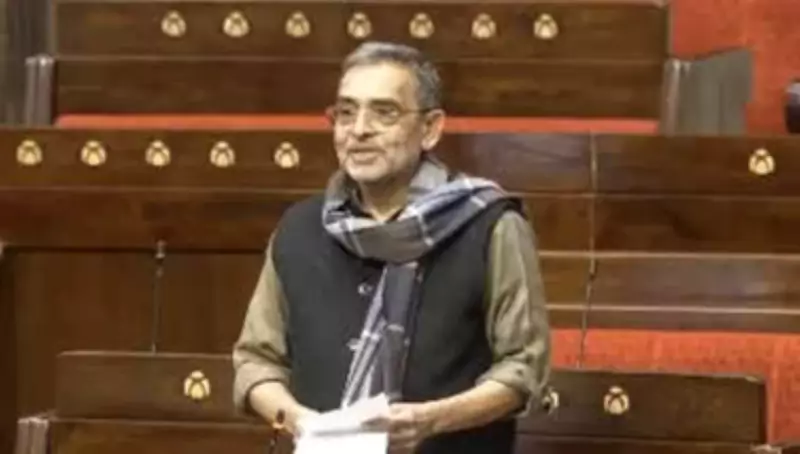
RLM Leader Upendra Kushwaha Advocates for Patna's Renaming to Patliputra in Parliament
In a significant parliamentary intervention, Rashtriya Lok Morcha (RLM) chief and Member of Parliament Upendra Kushwaha has formally demanded the renaming of Bihar's capital city Patna to its ancient name Patliputra. The demand was made during the discussion on the motion of thanks on the President's address in the Rajya Sabha on Wednesday, sparking renewed debate about historical identity and cultural heritage.
Historical Significance and Cultural Heritage Arguments
Kushwaha passionately argued that Patliputra represents a powerful symbol of India's glorious history and rich cultural legacy. The former Union minister emphasized that restoring the ancient name would honor the region's historical importance and reconnect modern Bihar with its illustrious past.
"Patliputra is not just a name but a symbol of India's glorious history and cultural heritage," Kushwaha stated during his parliamentary address. "Therefore, the state capital should be given back its ancient and historically significant name."

Precedents of Successful Renaming Initiatives
To strengthen his argument, Kushwaha cited several successful renaming precedents across India:
- Calcutta to Kolkata in West Bengal
- Orissa to Odisha for the eastern state
- Bombay to Mumbai in Maharashtra
"When the names of all these important cities and states could be changed to reflect their historical and cultural identities, why can't Patna be renamed as Patliputra?" he questioned rhetorically, highlighting what he sees as a logical consistency in such naming corrections.
Connecting to Mauryan Glory and Historical Legacy
Kushwaha elaborated on the historical context, noting that during the Mauryan period, when Patliputra served as the capital, Bihar's influence extended across vast territories that included parts of modern-day Bangladesh, Bhutan, Afghanistan, and Nepal.
"The symbols of that golden era are still present as remnants of our glorious past," he explained. "During Mauryan rule, Bihar's glory and prestige were unmatched across the entire world. The history of Bihar from that period remains a tremendous source of pride for all Indians."
The RLM leader framed the renaming as a duty to historical preservation, stating: "It is our responsibility to clear the dust that has settled on those historical periods and bring them back to life through appropriate recognition and commemoration."
Parliamentary Context and Additional Developments
The demand emerged alongside other significant parliamentary discussions. In a related development, Union Minister of State for Home Affairs Nityanand Rai provided crucial clarification regarding caste enumeration in the upcoming Census 2027.
In a written reply to a question in the Rajya Sabha, Rai confirmed that India's census process will continue its traditional two-phase approach. Importantly, he specified that caste-related data collection will occur during the second phase of the census operations, addressing ongoing confusion and speculation about the methodology for gathering this sensitive demographic information.
This parliamentary session thus addressed both symbolic historical recognition through potential renaming and practical demographic data collection through the census process, reflecting the diverse range of issues currently engaging India's legislative attention.






