UP BJP Adopts Strategic Silence on Controversial UGC OBC Discrimination Regulations
The Uttar Pradesh unit of the Bharatiya Janata Party has made a calculated decision to maintain a stoic silence regarding the newly introduced University Grants Commission regulations that explicitly include Other Backward Classes within the scope of caste-based discrimination protections. This strategic restraint comes as the party finds itself navigating a politically sensitive minefield with potential implications for both upper caste and OBC constituencies.
Leadership Directs Functionaries to Exercise Restraint
According to sources within the party, the BJP's top leadership has specifically instructed its functionaries to refrain from publicly airing their views on this contentious issue. This directive aims to prevent potential backlash from multiple caste groups that could place the saffron outfit in an uncomfortable position. "The party certainly finds itself in a bind," revealed a senior UP BJP leader, who explained that protests by one caste group would inevitably prompt counter-protests from another.
The leader further elaborated, "We have been asked to exercise restraint until a concrete situation is reached on that front." This cautious approach reflects the BJP's recognition of the delicate social equations at play in Uttar Pradesh, particularly with assembly elections approaching next year.

Contrasting Voices Within the Party
Despite the official silence, UP Minister for Backward Class Welfare and UP BJP OBC Morcha chief Narendra Kashyap took to social media to express support for the UGC regulation. He described it as a significant step toward social security for marginalized communities. This divergence highlights the internal tensions within the party as it attempts to balance competing interests.
The new UGC regulations represent a substantial policy shift with several key provisions:
- Explicit empowerment of OBC students and employees to file complaints regarding harassment or discrimination
- Mandatory establishment of Equal Opportunity Cells in all universities and colleges
- Structural changes across higher education institutions to address caste-based discrimination
The UGC has characterized these measures as "corrective steps" that reflect ground realities in educational institutions across the country.
Growing Internal Dissent and Resignations
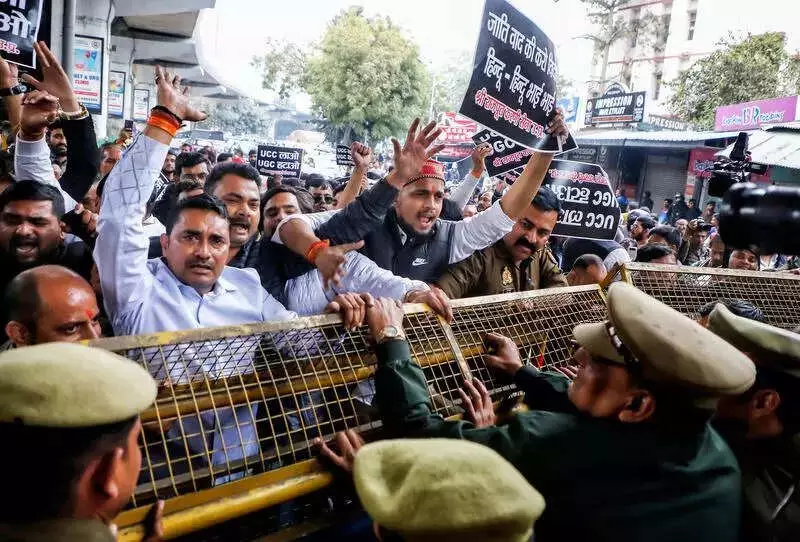
The controversy has already triggered significant internal dissent within the BJP's Uttar Pradesh organization. In a notable development, approximately half a dozen BJP workers at the Mandal and sector level in Bakshi-Ka-Talab, Lucknow, resigned from the party on Monday. These resignations were specifically linked to opposition against the UGC regulation, with party workers asserting that the new rules threatened the future prospects of their children.
This dissent gained further momentum when Alankar Agnihotri, a Provincial Civil Service officer, resigned from his position as City Magistrate of Bareilly in protest against the UGC regulation. These resignations underscore the deep-seated concerns within certain sections of the party and administration regarding the implications of the new rules.
Political Calculations Ahead of Assembly Elections
Political analysts suggest that the BJP's decision to distance itself from the UGC regulations reveals a deeper political dilemma facing the party in Uttar Pradesh. With assembly elections scheduled for next year, the BJP faces the challenging task of strengthening its traditional upper caste support base while simultaneously maintaining its alliances with OBC communities.
This balancing act has become particularly crucial as the BJP seeks to reinforce its social coalition to counter the opposition's aggressive Pichhda, Dalit, Alpsankyak (PDA) electoral narrative. This narrative is widely believed to have diminished the BJP's performance in the 2024 Lok Sabha elections, reducing its seat tally in Uttar Pradesh from 62 to 33.
Precarious Alliance Dynamics
The situation presents particular challenges for the BJP given its carefully constructed coalition with multiple OBC-centered political parties. These alliance partners include:

- Anupriya Patel's Apna Dal (S)
- Sanjay Nishad-led NISHAD party
- Om Prakash Rajbhar-led Suheldev Bharatiya Samaj Party
- The Jat-dominated Rashtriya Lok Dal
These political allies derive their strength from caste-specific constituencies that are likely to welcome institutional mechanisms addressing perceived discrimination against OBC communities. A senior state BJP functionary explained the delicate situation: "Any dilution or rollback of the regulation could strain these alliances, weakening the very social coalition the BJP is trying to consolidate against the opposition."
The BJP's strategic silence on the UGC regulations thus represents more than mere political caution—it reflects the complex social arithmetic and alliance management required in India's most politically significant state. As Uttar Pradesh prepares for another crucial electoral battle, the party's handling of this sensitive issue may have far-reaching implications for its electoral fortunes and social coalition-building efforts.