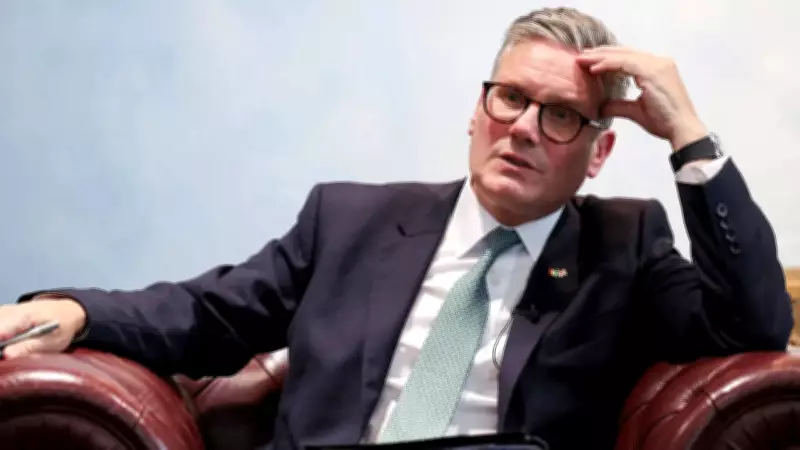
British Prime Minister Keir Starmer adopted a combative stance on Tuesday as a brewing rebellion within his ranks intensified, with a number of ministers urging him to outline a schedule for a leadership change. Starmer remained resolute during a critical Cabinet meeting at 10 Downing Street, informing his team that he intends to 'get on with governing' as he seeks to move past the Labour Party's disappointing local election results under his leadership.
Even as pressure escalated with the resignation of a relatively obscure junior housing minister, Miatta Fahnbulleh, Starmer insisted that the requisite threshold of 20 percent of MPs to formally challenge the Labour leader had not been reached. 'As I said yesterday, I take responsibility for these election results, and I take responsibility for delivering the change we promised,' Starmer told his Cabinet. 'The past 48 hours have been destabilising for government, and that has a real economic cost for our country and for families. The Labour Party has a process for challenging a leader and that has not been triggered. The country expects us to get on with governing. That is what I am doing and what we must do as a Cabinet.'
His remarks could be interpreted as a challenge by some Labour members of Parliament who have been pressuring Starmer to set a departure timeline. In her resignation letter, Fahnbulleh wrote: 'Our country faces enormous challenges and people are crying out for the scale of change that this requires. The public does not believe that you can lead this change and nor do I. Therefore, I urge you to do the right thing for the country and the Party and set a timetable for an orderly transition so that a new team can deliver the change we promised the country.'

This follows former Indo-Pacific minister Catherine West 'giving notice' that she was collecting signatures to push Starmer into setting a timeline for the 'election of a new leader in September.' At least 81 Labour MPs are required to mount a public challenge to trigger a leadership election. According to media reports, some senior Cabinet figures, including Home Secretary Shabana Mahmood and Foreign Secretary Yvette Cooper, are among those calling for Starmer's departure. Others, such as Deputy Prime Minister David Lammy and Defence Secretary John Healey, are also believed to favour an orderly transition plan.
The frontrunners to replace Starmer include Manchester Mayor Andy Burnham, Health Secretary Wes Streeting, and former Deputy Prime Minister Angela Rayner. While a more immediate timeline would benefit Streeting, a staggered transition in September would favour Burnham, who needs to contest a by-election to become an MP before being eligible for the top job. 'The Labour Party has a process for triggering a leadership election. That has not happened, so we all intend to get on with our jobs and that's what I'm going to do,' UK Housing Secretary Steve Reed told reporters after Tuesday's tense Cabinet meeting. Technology Secretary Liz Kendall added, 'There is a process to challenge the leader, nobody has made that challenge.'
Despite such expressions of support, there is a growing sentiment that Starmer's reset speech on Monday did little to reassure his party colleagues that he remains the best choice to lead the Labour Party. 'I'm not going to shy away from the fact that I've got some doubters, including in my own party and I'm not going to shy away from the fact that I have to prove them wrong, and I will,' Starmer had declared. However, as junior ministers begin to resign and behind-the-scenes pressure mounts, the window for him to prove his doubters wrong continues to narrow rapidly.