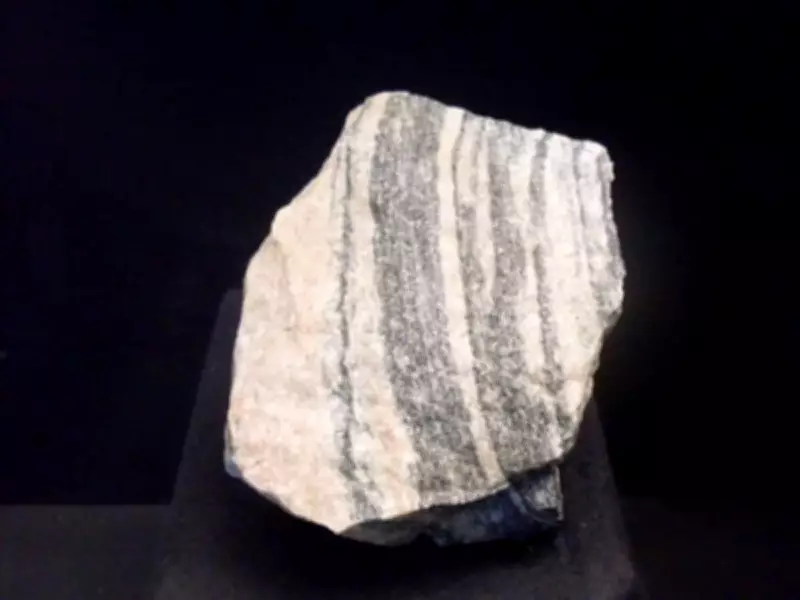
In the northernmost part of Canada's Northwest Territories, an area composed of ancient rock is recognized by scientists as one of the most significant geological formations in the world. The Acasta Gneiss, which comprises some of the oldest rocks on the planet, can be traced back more than four billion years.
Why the Acasta Gneiss is Important to Geologists
Earth constantly regenerates through volcanic activity, tectonic movements, and weathering. This process explains why practically nothing has survived from Earth's earliest geological history. Therefore, the Acasta Gneiss holds great significance for geologists. The rock formation can be found in the Canadian Shield, one of the oldest geological regions on Earth. It has been regarded as one of the best-preserved specimens of ancient continental crust that developed during the Hadean and Archean ages. According to studies published in Nature Communications, old landforms such as the Acasta Gneiss play an essential role in Earth's geological history because little has survived from its early periods.
Microscopic Crystals Reveal the History of the Planet
Much of the data regarding the Acasta Gneiss is contained within zircon crystals. Zircon is an exceptionally durable mineral because of its resistance to both temperature and pressure. Additionally, zircon contains uranium, which decays into lead over time. One way to determine the age of a crystal is to calculate the ratio of these elements using uranium-lead dating. Research conducted by the United States Geological Survey determined that the age of zircons found in the Acasta Complex varies between 4.05 and 3.85 billion years, with some inherited zircon fractions reaching up to 4.2 billion years. These facts clearly show that the Acasta Gneiss Complex represents different stages of geological processes. Experts refer to the complex as a "polyphase archive," meaning the rocks underwent reworking many times over an extended period.

Chemical Fingerprints in the Mineral
In addition to zircon ages, modern scholars explore the composition of minerals. Researchers analyze trace elements, oxygen isotopes, and rare earth chemistry contained in the rocks. In 2024, a study published in PubMed compared the chemistry of zircons in the Acasta Gneiss Complex to tectonic settings of Earth's ancient crust. These chemical compositions may offer clues about how continents evolved. Scientists are investigating whether early Earth had a structure similar to the present plate tectonic system or if entirely novel geologic processes were behind its evolution. Geochemists have found that zircon composition provides distinct indications of ancient crust formation. Oxygen isotope ratios suggest magma reacted with water in Earth's atmosphere, while other elements give evidence of melting and crust recycling.
Geologic Secrets Unveiled by the Rocks
Acasta Gneiss rocks come from a period when Earth was very different from today. No atmospheric oxygen existed, continents were not formed, and many geological events took place. Yet, geological analysis shows that processes involved in continent formation were already occurring much earlier than previously believed. This is vital because scientists are uncertain about the beginning of these processes. Isotopic and mineral composition analyses hold valuable information in this respect, and Acasta Gneiss rocks are among those yielding the most relevant data.
Reasons Why Scientists Keep Coming Back to Acasta
Scientists explain that the biggest benefit of studying Acasta Gneiss lies in its complexity. The rocks are not pure; rather, they contain different layers of old rock with geological imprints on top. This creates a complex puzzle for scientists but can provide significant scientific information. Each zircon mineral can hold an important part of our planet's history. When combined, these minerals help scientists understand what happened billions of years ago. At first glance, they may seem ordinary, but these rocks contain elements from one of the oldest chapters of our planet.