UCC Bill Introduced in West Bengal Assembly
The newly elected Chief Minister of West Bengal, Suvendu Adhikari, has announced that the state will introduce the Uniform Civil Code (UCC) Bill in the Assembly on Monday. The UCC law represents a long-term ideological strategy of the BJP. The government has the option to pass the Bill as it has more than a two-thirds majority. However, since West Bengal has a significant Muslim and Christian population, some leaders believe that first sending the Bill to a select committee would make the process more democratic and allow a broader discussion. Regardless of the method, the expectation is that the UCC Bill will eventually be passed in West Bengal.
What the Uniform Civil Code Entails
The UCC means there will be a common set of laws for all citizens, where personal matters like marriage, divorce, inheritance and related issues will not be governed separately based on religion. It reflects the BJP's larger ideological vision of a unified legal framework under the idea of 'Akhand Bharat'.
To understand the larger ideological goal behind it, we need to look at the historical background. The Rashtriya Swayamsevak Sangh (RSS) was founded in 1925 and the Bharatiya Jana Sangh in 1951. After years of political struggle, this ideological stream eventually transformed into the Bharatiya Janata Party (BJP) in the 1980s. For decades, the Jana Sangh, RSS and BJP have carried forward the ideology based on the idea of Hindu cultural nationalism, which its supporters describe as Sanatan Hindu nationalism. Later, independent India adopted the Nehruvian model of secularism and socialism and took India in a different direction.

Historical Roots of Hindu Nationalism
During the freedom movement, Indian nationalism had different streams. The Congress leadership fought against British colonial rule, while another stream of right-wing nationalism also emerged. Leaders like Bal Gangadhar Tilak represented a form of Hindu nationalist thought, which later influenced the Hindu Mahasabha and the RSS. An aggressive strain of Hindu nationalism was followed by Veer Savarkar.
When Jawaharlal Nehru was elected Prime Minister, Rajendra Prasad was the President, whose philosophy of Hindutva was strong; the same applied to Sardar Patel's Hindu philosophy. After Independence, Nehru's model of secularism became dominant. However, the BJP and RSS continued to argue for a different interpretation of Indian identity, rooted in Hindu cultural traditions.
BJP's Ideological Agenda and Bengal
When Atal Bihari Vajpayee became Prime Minister and LK Advani emerged as a key BJP leader while the RSS remained influential, issues like cultural nationalism, Ram temple construction, Article 370 and the UCC remained central parts of the party's ideological agenda. However, critics argue that this approach is an attempt to create religious polarisation by bringing identity issues into politics.
Syama Prasad Mookerjee, one of the founders of the Bharatiya Jana Sangh, was from Bengal. He played an important role in arguing for the creation of West Bengal during the Partition, opposing the idea of the entire Bengal becoming part of Pakistan. Mookerjee had many discussions on this issue with Nehru. He also wrote several letters to him. The celebration of West Bengal Day, the focus on Bengal's history, and the emphasis on Mukherjee's legacy are all connected with this political narrative. However, the opposition party argues that not only Mukherjee but several Congress leaders had also supported the development of West Bengal during the Partition.
Political Landscape and Challenges
The BJP believes that West Bengal has remained outside its ideological influence for a long time because of decades of Left rule and later the Trinamool Congress government. It created a different political culture in Bengal. Illegal immigration has become a major political issue in West Bengal.
Adhikari wants to be seen as a strong Hindu nationalist leader in Bengal and the face of this new political identity. He is following the BJP central leadership, and they are planning to follow the Bengali communist model.

However, for this transformation to succeed, the BJP believes that the political influence of Mamata Banerjee must first be weakened. The party wants to challenge the Mamata Banerjee and Abhishek Banerjee leadership model within the TMC and neutralise it politically. It is questioning the credibility of the TMC organisation by exposing its leaders accused of corruption.
Controversies and Cultural Debates
At the same time, the BJP has also faced criticism over some of its decisions. The decision to involve ISKCON in providing mid-day meals in schools and the exclusion of eggs from the menu reflected an attempt to promote vegetarianism even as non-vegetarian food habits are connected with Bengali culture. The debate has turned into a discussion about cultural identity, freedom of choice and whether political ideology was influencing everyday life. Questions are being raised whether a particular cultural identity is being promoted over another.
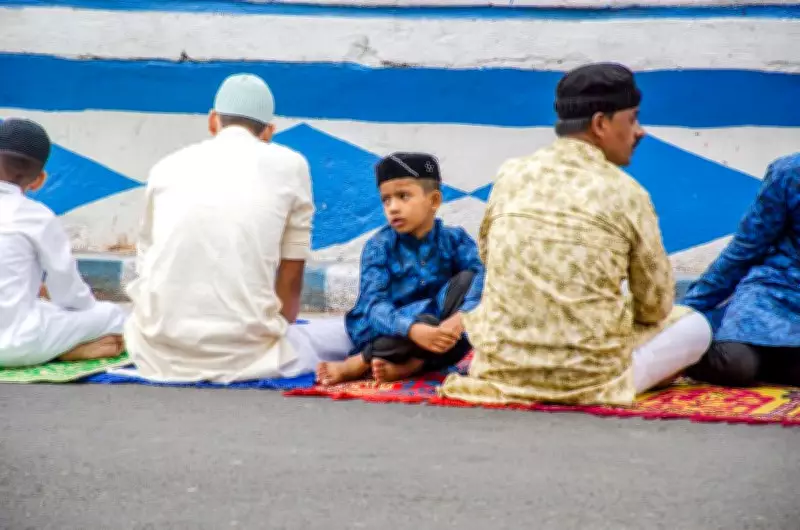
The larger question is how Bengalis themselves are responding to these changes. Interestingly, even among Muslims in West Bengal, there has not been a major protest or public reaction against the proposed UCC so far. This raises a question: have sections of the Muslim community accepted the idea that there will no longer be separate personal laws or special provisions? For example, during Eid celebrations, the traditional Namaz arrangement at Red Road was shifted to Brigade Parade Ground, and there was no major protest over the change.
Conclusion: A New Bengal Taking Shape?
A new Bengal appears to be taking shape. The question is whether Bengalis themselves are ready to move away from the Left's longstanding radical and pluralistic political model and connect with the BJP's idea of 'Akhand Bharat' and cultural nationalism.