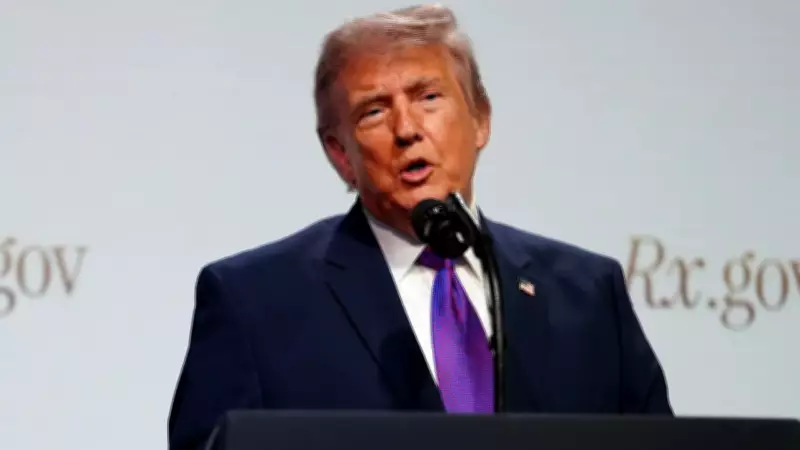
In the Grand Old Party, as the Republican Party is traditionally known, senators once moved through Capitol Hill with the authority of feudal barons, House committee chairmen wielded power akin to medieval dukes, and presidents often had to negotiate with their own party stalwarts. However, in Donald Trump's MAGA-infused Republican Party, the operating principle is far simpler: the president is king, one must kiss the ring, and hope that a primary rival does not suddenly receive a Truth Social endorsement at 2:13 a.m.
Latest Evidence of Trump's Command
The most recent demonstration of Trump's control over the party emerged this week in Texas, where he endorsed Texas Attorney General Ken Paxton against veteran Senator John Cornyn, co-chair of the Senate India Caucus, in a Republican Senate runoff. This endorsement landed in Washington like a mafia don publicly replacing a longtime lieutenant with a younger enforcer. Meanwhile, in another party primary in Kentucky, Thomas Massie, a maverick congressman who stood up to the MAGA leader, was decisively defeated by Ed Gallrein, a Trump-backed Navy SEAL.
Cornyn, a four-term senator and an establishment pillar, had spent months delicately seeking Trump's approval, dutifully aligning himself with MAGA priorities, much like his many Senate colleagues who now grovel before the boss. It made no difference; Trump instead chose Paxton, a man burdened with enough legal and ethical baggage to require his own airport carousel, but whose real qualification is even greater loyalty to Trump than Cornyn could muster. The message to party functionaries was unmistakable: experience is optional, ideology is negotiable, electability is overrated, but fealty to Trump is mandatory.

Impact on GOP Establishment
The GOP establishment, led by Senate Republican leader John Thune, had preferred Cornyn because, aside from his experience, polls showed him defeating the Democratic candidate James Talarico, whereas Paxton is vulnerable against him. However, Trump discarded Cornyn anyway to reinforce his grip on the party. Last week, Louisiana Senator Bill Cassidy, who voted to convict Trump after the January 6 insurrection, suffered a similar fate at the hands of a Trump-backed challenger.
Trump's dominance now extends beyond elections into the daily functioning of government itself. Commentators in Washington increasingly compare the atmosphere around the administration to a patronage empire where loyalty is rewarded and dissent is punished with efficiency reminiscent of the former USSR. Cabinet members echo Trump's language almost verbatim, and Republican lawmakers fall over each other to defend policy reversals they once opposed, often appearing alongside the president with cloying sycophancy worthy of North Korea, a regime the MAGA leader openly admires.
Recent controversies involving tax enforcement and ethics oversight have only intensified accusations that institutions once designed to act independently are now operating with extraordinary deference toward Trump, his family, and his business interests. The White House rejects such claims as partisan hysteria, but even conservatives outside the MAGA sphere concede that no modern president has exercised this degree of personal command over his party and administration.
Central Paradox of Trumpism
This may explain the central paradox of Trumpism in 2026: Trump's national approval ratings remain dismal, especially among independents and suburban voters. Yet inside the GOP, he is the boss because he did not merely inherit the party; he has rebuilt it in his own image. Voters who once cared about fiscal conservatism or foreign policy now prize cultural combat, media warfare, and loyalty to Trump above all else. To many MAGA voters, attacks on Trump are seen not as political disagreements but as attacks on their tribe, identity, and social status.

The party's ecosystem reinforces this dynamic daily. MAGA media personalities, activist groups, donors, and online influencers all function as an interconnected loyalty network in which deviation from Trump means political suicide. A senator can survive poor polling, but surviving a Trump nickname is harder. So Republican politicians continue their synchronized choreography of devotion. Some do it enthusiastically; others do it with the haunted expression of hostages reading prepared statements. Dissenters like Cassidy and Massie go into the dustbin of party history.
About the Author: Chidanand Rajghatta, author of Kamala Harris: Phenomenal Woman.