Trump's Theological Skirmish with Pope Leo Sparks Widespread Backlash
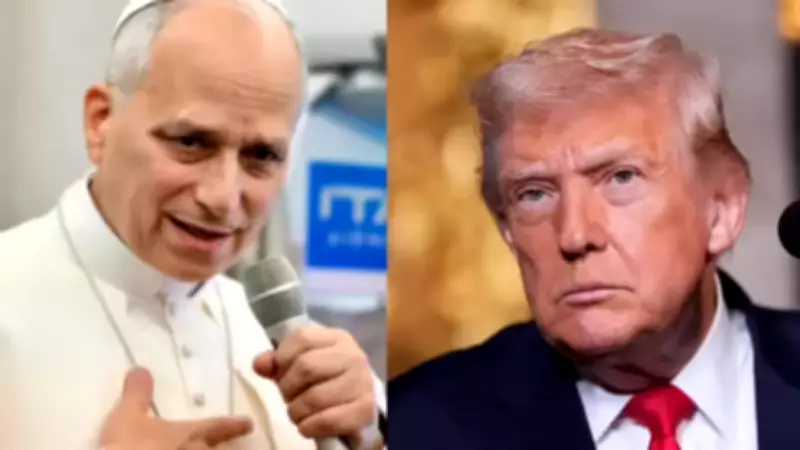
Donald Trump, the MAGA leader, has ignited a significant controversy by engaging in a theological dispute with Pope Leo, the spiritual head of over a billion Catholics. This clash has triggered a backlash from his own conservative base, with Republican leaders, Christian activists, and late-night comedians uniting in criticism, marking a rare moment of convergence on the same issue.
Conservative Discomfort and Political Fallout
Initially, Trump's outburst against the Pope might have been dismissed as another instance of his characteristic bravado. However, it has landed awkwardly with Christian conservatives, who form the backbone of his political coalition. This has raised serious questions about whether even his famously resilient support has limits. Republican Senator Thom Tillis commented, "It's never really a good look for politicians to cross swords with Popes. It very seldom ends well," a sentiment echoed quietly across GOP circles. Others were less diplomatic, describing the episode as an unnecessary provocation that veered into blasphemy.
Late-Night Comedy Roasts the Fiasco
America's unofficial ministry of satire, late-night television, pounced on the situation with sharp humor. Seth Meyers joked, "In what hospital do the doctors wear open-toe sandals and carry a ball of divine energy instead of a stethoscope? Nothing says 'medical professional' like a first-century linen tunic and a mystical orb of light. If my surgeon walks in wearing a red sash and holding the Holy Spirit, I'm getting a second opinion." Jimmy Kimmel dismissed Trump's claim that the Pope was "weak on crime" with a comic shrug: "What does the Pope have to do with crime? He's not Batman, he's the Pope. This is what happens when you sell Bibles instead of reading them." Jimmy Fallon added, "Some people walk on water. Trump walks on his own press releases." Stephen Colbert offered a defining line: "Trump picked a fight with the Pope — finally, a feud where both sides claim infallibility."

Strange Turns and Internet Sleuthing
The spectacle took an even stranger turn when internet sleuths spotted a familiar face in an AI-styled image Trump shared, portraying himself as a Christ-like savior. They claimed the figure being "healed" bore a passing resemblance to the deceased sexual offender Jeffrey Epstein. One comic deadpanned, "Maybe the weirdest part? The man Donald Jesus Trump is healing looks a whole lot like Epstein. Even AI can't keep him from his best friend, Jeff." Not all satire spared the Vatican; one late-night host proposed a ceasefire, saying, "Look, President Trump, I know the Vatican has been critical of your policies, but you got to remember that at the end of the day, you and the Catholic Church both historically care deeply about the same thing: covering up sex scandals."
Political Implications and Resilient Support
Beneath the humor lies a more consequential political question. Trump has long enjoyed durable backing from white evangelical voters and conservative Catholics, who have overlooked his personal controversies in favor of policy wins on courts, religious liberty, and cultural issues. This alliance has proven remarkably resilient, surviving episodes that might have crippled a conventional presidency. However, this time, the discomfort is more palpable. For devout voters, the issue is not merely political tone but religious imagery, where symbolism carries significant weight.
Despite this, signs of outright rupture remain limited. Some supporters argue that the clash with the Vatican reinforces Trump's outsider credentials, casting him as a disruptor unafraid to challenge institutions, whether secular or sacred. In this reading, criticism from Rome may function less as a liability and more as proof of authenticity. For now, the episode stands as a vivid reminder of the peculiar alchemy of Trump-era politics, where scandal often transcends into spectacle, and as one comic put it, the goal appears to be "turning scandals into sermons."