

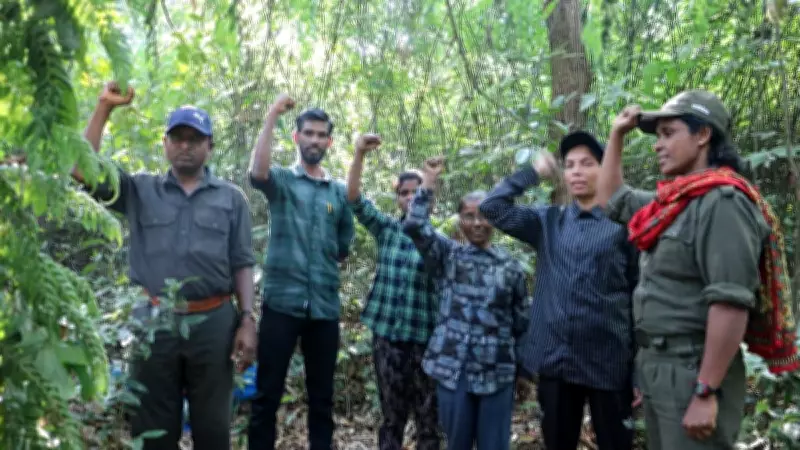
Top Naxal Commander Surrenders to Telangana Police, Signaling End to Maoist Insurgency
In a significant development for India's internal security landscape, a top Naxal commander has surrendered to the Telangana police, potentially signaling the conclusion of the nation's long-running Maoist insurgency. This event marks a critical turning point in the decades-old conflict that has affected several states across central and eastern India.
Key Figure in Maoist Movement Surrenders
The surrendered commander, identified as Tirupati, was a prominent leader within the Naxalite hierarchy. His decision to lay down arms and turn himself in to authorities in Telangana is being viewed as a major blow to the Maoist insurgency's operational capabilities and morale. This surrender follows extensive efforts by security forces to dismantle the insurgent network through a combination of strategic operations and rehabilitation initiatives.
Tirupati's Involvement in Historic Events
Tirupati played a crucial role in shaping key events throughout the Maoist movement's history. His involvement includes participation in the pivotal 2007 "Unity Congress," which was a landmark gathering aimed at consolidating various Naxal factions under a unified command structure. This congress significantly strengthened the insurgents' organizational framework and tactical coordination across regions.

Additionally, Tirupati was instrumental in planning and executing the Geedam police station attack in Chhattisgarh, a notorious incident that highlighted the Maoists' capacity for violent assaults on state infrastructure. This attack underscored the persistent security challenges posed by the insurgency in conflict-affected areas.
Implications for India's Security and Policy
The surrender of such a high-ranking commander is expected to have profound implications for India's counter-insurgency strategies and regional stability. It may lead to:
- Enhanced intelligence gathering as Tirupati provides insights into Maoist operations and leadership structures.
- Accelerated peace processes in affected states, encouraging other insurgents to consider rehabilitation.
- Reduced violence in regions like Telangana and Chhattisgarh, fostering development and governance.
This development aligns with ongoing government efforts to address root causes of insurgency through socio-economic programs and security measures.
Context of the Maoist Insurgency in India
India's Maoist insurgency, often referred to as the Naxalite movement, has its origins in the late 1960s and has since evolved into a complex conflict involving ideological, economic, and social dimensions. The insurgency has primarily impacted states such as Chhattisgarh, Jharkhand, Odisha, and parts of Telangana, leading to significant casualties and hindering development in remote areas.
Recent years have seen a gradual decline in insurgent activities due to intensified security operations and community engagement initiatives. The surrender of Tirupati could represent a symbolic end to this protracted struggle, though challenges in rehabilitation and integration remain.
As authorities process this surrender, focus will shift to ensuring a smooth transition for Tirupati and leveraging this opportunity to further weaken the remaining Maoist networks. This event underscores the dynamic nature of India's internal security environment and the ongoing pursuit of lasting peace in conflict zones.






