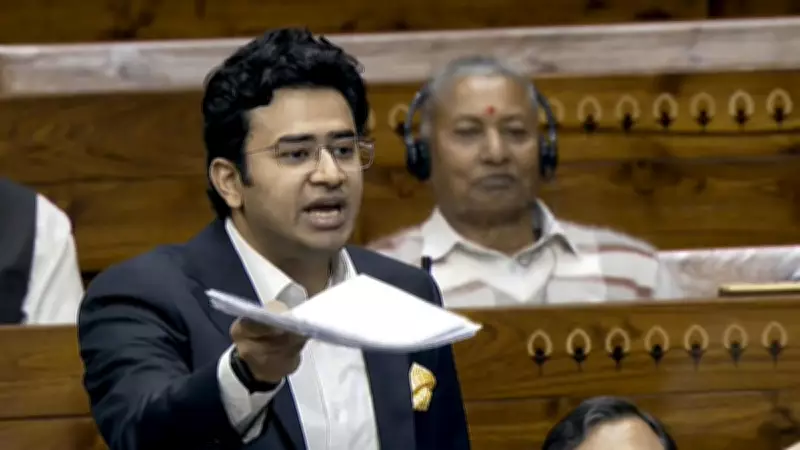
Bharatiya Janata Party MP Tejasvi Surya delivered a sharp critique of the previous United Progressive Alliance government during a parliamentary session, characterizing their tenure as "a decade of lost opportunities" for India. The young parliamentarian's remarks sparked intense exchanges between opposition and treasury benches in the Lok Sabha.
Parliamentary Confrontation Over UPA Legacy
The parliamentary proceedings witnessed heated moments as Surya systematically criticized the UPA administration's governance record. His comments focused particularly on what he described as policy failures and missed developmental chances during the coalition's decade-long rule.
Security Policy Under Scrutiny
Surya specifically targeted the UPA government's approach to national security challenges, questioning their handling of both terrorism and Naxalism. "The previous government's soft stance on these critical security issues compromised national interests," the BJP MP asserted during his address.

The criticism extended to what Surya portrayed as inadequate counter-terrorism measures and insufficient action against left-wing extremism during the UPA years. His remarks triggered immediate responses from opposition members, leading to brief but intense verbal exchanges across the parliamentary aisle.
Development Narrative Contrast
Beyond security concerns, the BJP parliamentarian contrasted the UPA's governance approach with the current administration's development agenda. He emphasized what he viewed as missed economic opportunities and delayed infrastructure projects during the previous regime.
The parliamentary exchange highlighted ongoing political debates about:
- Comparative governance records of successive administrations
- Divergent approaches to national security challenges
- Political narratives around development and opportunity
- Parliamentary dynamics between ruling and opposition parties
As the Lok Sabha session continued, the exchange underscored the persistent political divisions regarding historical governance assessments and current policy directions. The incident reflects how parliamentary debates often serve as platforms for contrasting political legacies and policy approaches between competing political formations.