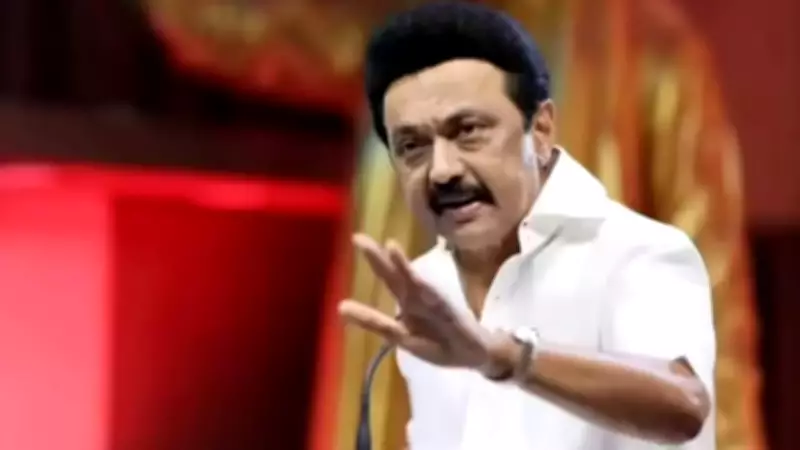
Tamil Nadu Chief Minister Advocates for Federal Restructuring in Landmark Assembly Address
Tamil Nadu Chief Minister M K Stalin presented a pivotal document to the state assembly on Wednesday, formally tabling the comprehensive report of the High-Level Committee on Union–State Relations. In a significant political move, Stalin emphasized the urgent necessity for greater state autonomy and the systematic decentralization of powers, which he argued have become excessively concentrated within the Union government over recent decades.
"Belling the Cat": A Call for Constitutional Courage
Characterizing this initiative as "belling the cat," a metaphor for undertaking a difficult but essential task, Stalin posed a rhetorical challenge to the assembly: "If we cannot do it, then who can?" His remarks were met with enthusiastic applause from the treasury benches, underscoring the political weight of the proposal.
The Chief Minister articulated a clear message intended for state governments nationwide and the Union government in New Delhi. "What I want to convey is that autonomy for states and a coalition government at the Centre are not merely desirable but essential," Stalin stated. He clarified that this position transcends partisan politics, framing it as "a crucial policy for people's lives and their development."

Coalition Governance as a Constitutional Imperative
Stalin further elaborated that coalition governance is fundamental to India's democratic ethos, which inherently stands for pluralism and diversity. "That is what this report reflects," he affirmed, linking the committee's findings directly to the nation's constitutional spirit.
The report itself advocates for the construction of a mature federal union, where governmental powers and developmental opportunities are not monopolized by a central authority but are equitably distributed. It outlines specific legal and administrative measures designed to achieve this decentralization. Crucially, the document argues that enhancing India's federal character through constitutional means would not weaken the Union but rather strengthen the nation's democratic foundations.
Legal Pathways and Tamil Nadu's Specific Challenges
Addressing the practical implications, Stalin noted that federal strengthening represents the only viable path forward for Tamil Nadu. The state has encountered persistent challenges from the Union government in critical areas including the functioning of the governor's office, the allocation of central funds, and the contentious process of delimitation.
"We can achieve our goal only by amending the Constitution," the Chief Minister asserted, indicating that legislative change at the national level is the primary mechanism for realizing the committee's recommendations. The report details these proposed amendments and legal frameworks necessary to rebalance the Union-State dynamic.
This tabling of the report marks a formal escalation in the ongoing discourse on Indian federalism, positioning Tamil Nadu at the forefront of a national debate on power-sharing, administrative autonomy, and the structural evolution of India's governance model.