Tamil Nadu Chief Minister MK Stalin Condemns FCRA Amendment as Draconian Measure
NEW DELHI: Tamil Nadu Chief Minister MK Stalin, while campaigning vigorously ahead of the crucial state assembly elections, launched a sharp critique against the Union government's proposed amendment to the Foreign Contribution Regulation Act (FCRA) on Saturday. The DMK leader alleged that the legislative changes specifically target minority communities, with Christians facing particular scrutiny and potential repercussions.
Political Rally in Nagarcoil Highlights Constitutional Concerns
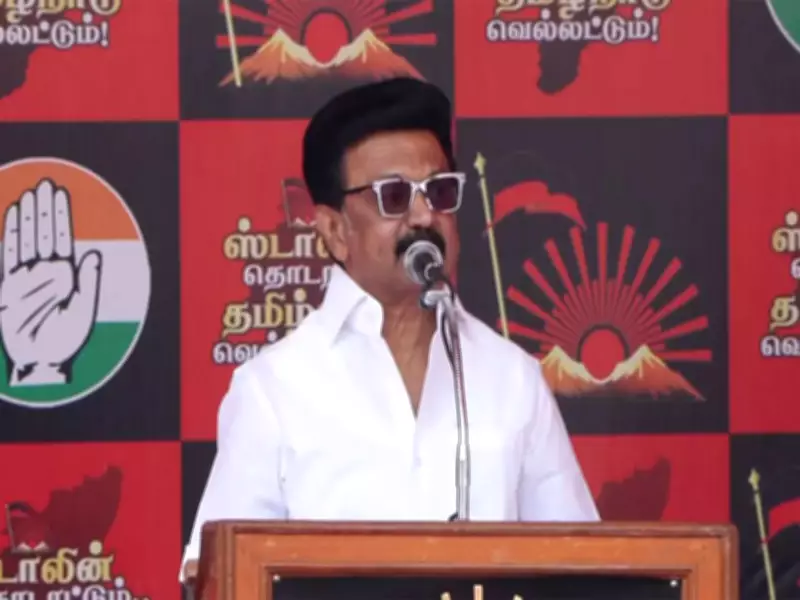
Addressing an enthusiastic election rally in Nagarcoil, a town with a substantial Christian demographic, Stalin characterized the FCRA bill as nothing less than an "assault on freedom of religion." He elaborated that the proposed amendments could enable authorities to cancel the recognition of Christian non-governmental organizations and confiscate their funds even for minor administrative lapses.
"The FCRA bill is draconian in nature," Stalin declared, as reported by PTI. "It deliberately targets minorities, especially Christian organizations that have been working for social welfare. If this legislation passes, it will create an environment of fear and restriction rather than freedom and service."

Broader Implications for Social Service and Vulnerable Communities
The DMK supremo expanded his criticism beyond religious freedom, arguing that the bill represents a serious infringement on constitutional rights. He emphasized that the legislation would adversely affect people engaged in social service, particularly impacting Scheduled Castes, Scheduled Tribes, and rural poor populations who often benefit from NGO-led initiatives.
"This bill is tantamount to taking away rights provided by the Constitution itself," Stalin asserted. "It's not just an attack on religious freedom but also on those who wish to contribute to social development through legitimate channels. The most vulnerable sections of our society will bear the brunt of these restrictive measures."
Political Context and Electoral Timing
Stalin revealed that he was among the first political leaders to condemn the proposed FCRA amendments, having already written to Prime Minister Narendra Modi urging immediate withdrawal of the bill. His comments come at a politically sensitive moment, with voting for all 234 assembly constituencies in Tamil Nadu scheduled for April 23, followed by vote counting on May 4.
The demographic significance of Nagarcoil adds weight to Stalin's statements. According to the 2011 national census, this town in Kanniyakumari district has a population of approximately 2.24 lakh residents, with Christians constituting around 30% of the population—making religious freedom a particularly resonant issue in this constituency.
Government Defense and Parliamentary Proceedings
Meanwhile, the BJP-led central government has staunchly defended the FCRA amendment legislation. Union Minister Kiren Rijiju has repeatedly asserted that the proposed changes aim to strengthen national security protocols and are not directed against any specific religious community. The minister has emphasized that the amendments seek to ensure greater transparency and accountability in foreign funding mechanisms.
Parliamentary proceedings have reflected the contentious nature of this legislation. The FCRA bill could not be taken up for discussion in the Lok Sabha recently due to vigorous opposition protests, highlighting the deep political divisions surrounding this proposed amendment.
Broader Political Critique Beyond FCRA
During his election rally, Stalin extended his criticism beyond the FCRA issue to address broader governance concerns. He alleged that the central government has consistently failed to protect Tamil Nadu fishermen operating in contentious maritime zones. Furthermore, the chief minister criticized the Union government's foreign policy approach, claiming that Prime Minister Modi has weakened India's influence even among smaller neighboring countries.

These comments reflect the DMK's campaign strategy of positioning itself as a defender of Tamil interests against perceived central overreach. In the 2021 state elections, the DMK-led Secular Progressive Alliance secured a decisive victory with 159 seats, with the DMK alone winning 133 constituencies—well above the majority threshold of 118 seats.
As Tamil Nadu approaches another electoral contest, the debate over the FCRA amendment has emerged as a significant flashpoint, intertwining issues of religious freedom, federal relations, and social welfare in what promises to be a closely watched political battle.