Tamil Nadu Chief Minister M K Stalin Slams Centre's CBSE Curriculum Framework
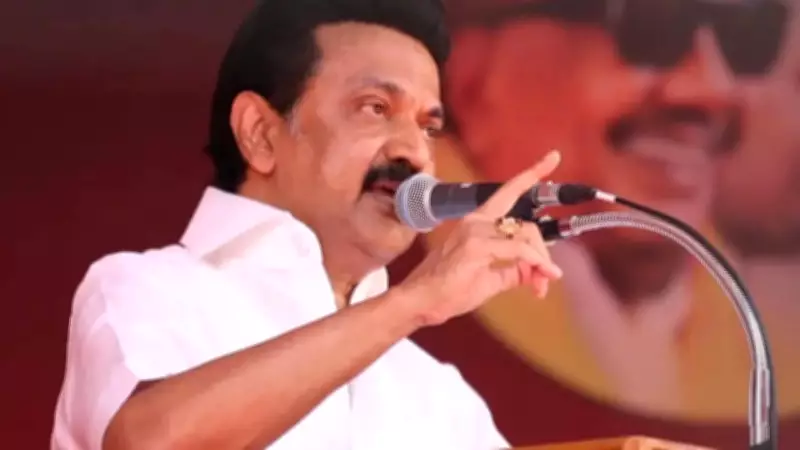
Tamil Nadu Chief Minister and DMK president M K Stalin launched a scathing critique against the Central government on Saturday, targeting the newly unveiled CBSE curriculum framework. He described it as a calculated and deeply concerning attempt at linguistic imposition that systematically favours Hindi over India's diverse regional languages.
A Calculated Attempt at Linguistic Imposition
In a strongly worded post on social media platform X, Stalin asserted that the recently revealed curriculum framework represents far more than innocent academic reform. "This is not an innocent academic reform; it is a calculated and deeply concerning attempt at linguistic imposition," the Chief Minister wrote, highlighting what he perceives as the government's centralising agenda.
Stalin specifically criticised what he called the BJP-led NDA government's approach, stating that "under the guise of promoting 'Indian languages,' the government was aggressively advancing a centralising agenda that privileges Hindi while systematically marginalising India's rich and diverse linguistic heritage."

Questioning Reciprocity and Fairness
The Tamil Nadu leader raised pointed questions about the framework's implementation and fairness. He questioned whether students in Hindi-speaking states would face similar requirements to learn languages like Tamil, Telugu, or Kannada. "For students in southern states, this framework effectively translates into compulsory Hindi learning. Yet, where is the reciprocity?" Stalin asked, emphasising what he views as the policy's one-sided and discriminatory nature.
Stalin further criticised the Centre for what he described as hypocrisy in language education policy. He highlighted the government's failure to make Tamil mandatory in Kendriya Vidyalaya schools and the insufficient appointment of Tamil teachers. "This is not commitment; this is rank hypocrisy," the Chief Minister stated bluntly.
Threat to Linguistic Diversity and Political Implications
The DMK president warned that such policies pose a significant threat to India's linguistic diversity, which he described as one of the nation's greatest cultural assets. Stalin called on political opponents, specifically mentioning the AIADMK and its NDA allies in Tamil Nadu, to take a clear stand on this critical issue affecting the state's linguistic identity.
Background: The Three-Language Policy
Stalin's remarks come as the Central Board of Secondary Education prepares to implement a phased three-language policy starting from the 2026–27 academic year, beginning with Class 6. Under this framework, students will be required to learn three languages, with at least two being Indian languages. The policy has sparked debate about language education priorities and regional linguistic rights across India.
The Chief Minister's strong criticism reflects ongoing tensions between regional language preservation efforts and national language policy initiatives, highlighting the complex linguistic landscape of contemporary India.