Sitharaman and Stalin Engage in Heated Exchange Over Crop Bonus Policy Letter
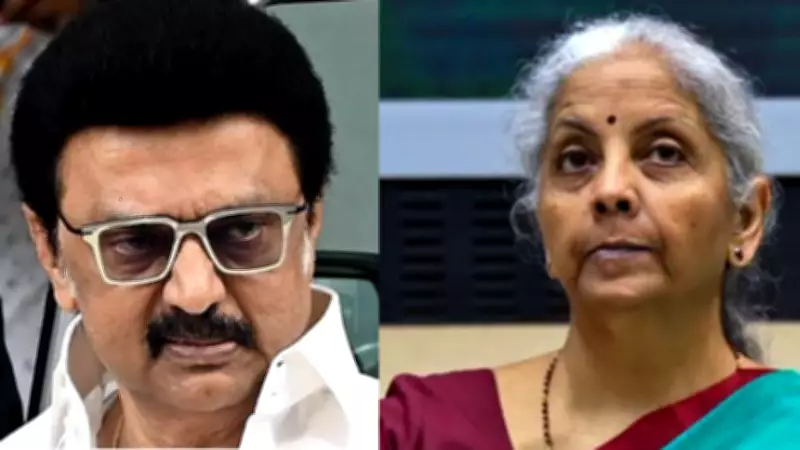
Union Finance Minister Nirmala Sitharaman and Tamil Nadu Chief Minister M.K. Stalin have become embroiled in a sharp public dispute regarding a communication from the finance ministry concerning crop bonus policies. The controversy erupted after Stalin challenged Sitharaman to release the letter publicly, prompting her to do so on social media platforms while accusing him of distorting its contents.
Social Media Sparks Political Confrontation
Stalin responded swiftly to Sitharaman's move, asserting that her statement had actually revealed what he termed as "her falsehood." In her social media post, Sitharaman emphasized that building robust food security requires constructive, continuous, and positive engagement with all stakeholders involved in agricultural policy. She criticized Stalin's approach, stating, "However, Stalin appears to persist with what he and his party are known for — drawing a wedge between Centre and states, creating false narratives and projecting themselves as protectors of farmers and Tamil people."
Origins of the Dispute: The January 9 Letter
The conflict traces back to a January 9 letter dispatched from the Union finance ministry to the Tamil Nadu chief secretary. This correspondence urged the state government to review its existing bonus policy and consider discontinuing incentives specifically for wheat and paddy cultivation. Instead, the letter advocated for a strategic shift in focus toward promoting the production of pulses, oilseeds, and millets across agricultural sectors.

During an election campaign event on April 10, Stalin leveled serious allegations against the Union government. He claimed that the central administration viewed Tamil Nadu's increasing rice production as "troublesome" and suggested the letter represented a deliberate attempt to curb this production growth. Following these remarks, Stalin directly dared Sitharaman to make the letter public for broader scrutiny.
Sitharaman's Defense and Policy Rationale
In her detailed rebuttal, Sitharaman refuted Stalin's charges and clarified the underlying intent behind the finance ministry's communication. She explained that the primary objective was to encourage greater production of pulses and oilseeds to address national supply-demand imbalances. "Doesn't he know that huge imports of palm oil are because our demand for edible oil is not adequately met with oil seeds supply. Similar is the issue with pulses. Farmers can get better prices for crops in which there is a supply-demand gap," Sitharaman stated emphatically.
The finance minister further criticized Stalin's priorities, remarking, "But farmers' interest is not in CM Stalin's mind." She highlighted that most state governments across various political parties had understood the letter's purpose and responded within the framework of cooperative federalism. According to Sitharaman, Stalin stood alone in choosing to sensationalize the matter rather than engage constructively.
Sitharaman articulated a broader vision for agricultural policy, asserting, "True food sovereignty is only possible when Centre and states work together to replace water-intensive surpluses with the essential crops India actually needs." This statement underscored her commitment to sustainable agricultural practices and national food security objectives.
Stalin's Counterattack and Evidence Presentation
Stalin issued a comprehensive rebuttal to Sitharaman's explanations, alleging that her lengthy clarification had only served to "expose her falsehood." He pointed to specific language in the letter, stating, "It is clearly stated that since the state's additional bonus for paddy has led to bumper production, the state govt should consider discontinuing the bonus." This interpretation directly contradicted Sitharaman's characterization of the letter's intent.

The Tamil Nadu chief minister went further by challenging Sitharaman's claim that most state governments had agreed with the finance ministry's recommendations. He labeled this assertion a "blatant lie" and provided supporting evidence through a tweet from Kerala Chief Minister Pinarayi Vijayan dated February 8. In that social media post, Vijayan had criticized the Union government's position, stating, "Union govt's demand to scrap Kerala's Rs 6.31 per kilogram paddy bonus labelling food production a liability is an affront to the farmers."
Broader Implications for Federal Relations
This public confrontation between a senior Union minister and a prominent chief minister highlights ongoing tensions in Centre-state relations regarding agricultural policy formulation. The exchange reveals fundamental disagreements about:
- The appropriate balance between crop diversification and existing production incentives
- The interpretation of communications between central and state governments
- The role of political narratives in agricultural policy debates
- The practical implementation of cooperative federalism in sensitive policy areas
Both leaders have utilized social media platforms extensively to present their cases directly to the public, bypassing traditional communication channels and escalating the political stakes of this agricultural policy discussion. The dispute continues to unfold as both sides maintain their positions regarding the interpretation and implications of the finance ministry's January 9 communication.