

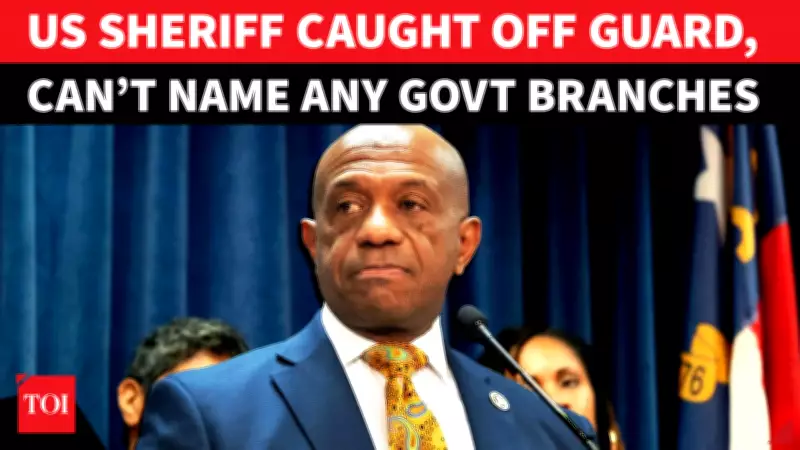
Sheriff's Civics Knowledge Gap Exposed in Legislative Hearing
A routine oversight hearing in North Carolina took an unexpected and embarrassing turn when an elected sheriff demonstrated a surprising lack of basic civic knowledge. The incident occurred during a session of the North Carolina House Oversight Committee, where lawmakers were discussing matters related to a tragic homicide case in Charlotte.
Question Reveals Fundamental Gap
Republican State Representative Allen Chesser directed a straightforward question to Mecklenburg County Sheriff Garry McFadden during the proceedings. The query focused on the foundational structure of American government, asking the sheriff to identify which branch of government his office operates under and to specify how many branches exist in total.
Sheriff McFadden's response, or lack thereof, immediately drew attention. When pressed about the number of government branches, the sheriff admitted he did not know the answer. This admission came despite the question covering material typically taught in elementary school civics classes.

Lawmaker Expresses Disappointment
Representative Chesser did not hide his astonishment at the exchange. Following the hearing, he publicly commented on the sheriff's inability to answer what he characterized as a "fifth-grade civics lesson." The lawmaker emphasized that such basic knowledge should be expected from any elected official, particularly one holding a significant law enforcement position.
The hearing had originally been convened to address serious matters, including the investigation into the killing of a young Ukrainian woman in Charlotte. However, the civics question diversion highlighted concerns about the fundamental understanding of government structure among some public officials.
Context and Implications
This incident raises broader questions about civic education and expectations for elected officials. While sheriffs primarily focus on law enforcement duties, understanding the separation of powers and governmental structure remains essential for proper interaction with other branches of government.
The three branches of the U.S. government—executive, legislative, and judicial—form the cornerstone of American democracy, with law enforcement agencies typically operating under the executive branch at various levels of government.
This public stumble comes at a time when civic knowledge among Americans has been a subject of national discussion, with various studies showing gaps in understanding of basic governmental functions and structures.






