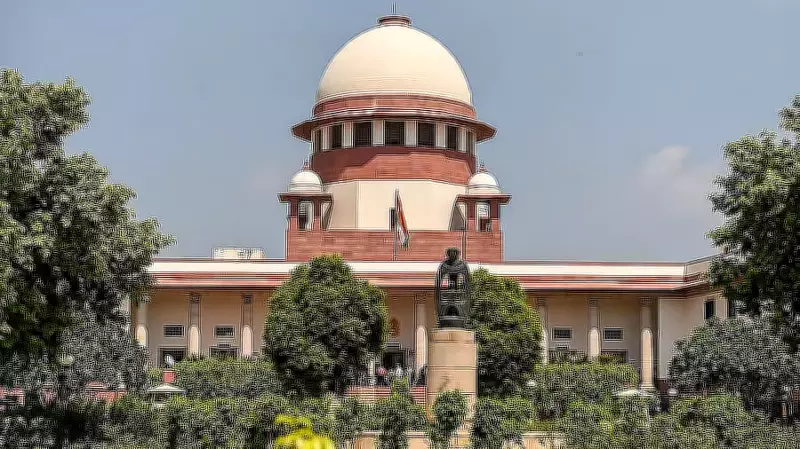
The Supreme Court on Tuesday questioned the Indian Young Lawyers Association (IYLA), asking if it considered itself the nation's chief priest, during the hearing of petitions related to discrimination against women at religious places. The observation came from a nine-judge Constitution bench of the Supreme Court, which is examining the legality of banning women's entry into temples and other religious sites.
Context of the Case
The case revolves around the Sabarimala temple in Kerala, where women of menstruating age (between 10 and 50 years) were traditionally barred from entering. The IYLA had filed a petition challenging this practice, arguing that it violated the constitutional rights of women. However, during the hearing, the bench raised a pointed question about the role of the petitioner.
The Supreme Court's Observation
Justice D.Y. Chandrachud, part of the nine-judge bench, asked the IYLA: "Are you the nation's chief priest?" This question was directed at the association's counsel, who argued for the removal of restrictions on women's entry. The bench emphasized that the court is not a theological body and cannot decide matters of religious faith without proper evidence and understanding.

The Supreme Court is currently hearing a batch of petitions that seek to clarify the scope of religious freedom and the rights of women to enter places of worship. The case has significant implications for other religious sites across India, including the Haji Ali Dargah in Mumbai and the Shani Shingnapur temple in Maharashtra.
Key Arguments Presented
- Petitioner's Argument: The IYLA argued that the practice of excluding women is discriminatory and violates Articles 14 (Right to Equality), 15 (Prohibition of Discrimination), and 25 (Freedom of Religion) of the Indian Constitution.
- Respondent's Argument: The Travancore Devaswom Board, which manages the Sabarimala temple, defended the practice, stating that it is an essential part of the temple's religious tradition and is protected under Article 26 (Freedom to Manage Religious Affairs).
Broader Implications
The nine-judge bench is examining whether the practice of excluding women from religious places is an essential religious practice under the Constitution. The verdict is expected to set a precedent for similar cases across the country. The Supreme Court has also sought responses from various religious groups and the central government.
The hearing continues, with the bench expected to deliver its judgment later this year. The case has drawn widespread attention, with activists and religious leaders closely watching the proceedings.