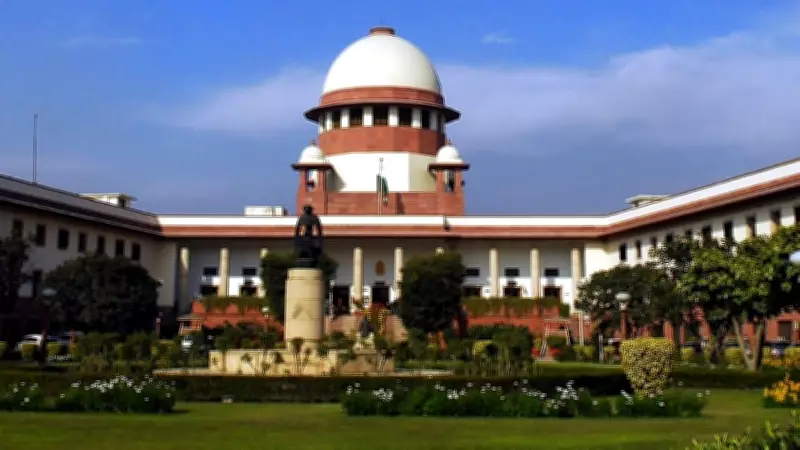
Supreme Court Raises Alarm Over Political Exploitation of Judicial System
The Supreme Court of India has issued a stern warning against the misuse of the judicial system for political gains, particularly in the context of upcoming elections. The apex court highlighted this critical issue during a recent hearing, expressing deep concern over attempts to drag the judiciary into political battles.
Court Observations on Election-Related Petitions
The bench noted with apprehension that certain petitioners, through their legal counsel, were attempting to seek directions from the court that would effectively restrain the state government from various actions. This was observed against the specific backdrop of the impending Kerala assembly elections, suggesting a pattern of using judicial processes for political objectives rather than genuine legal grievances.
The Supreme Court emphasized that such practices undermine the integrity of both the judicial system and the democratic electoral process. The bench made it clear that courts should not become arenas for settling political scores or gaining electoral advantages, especially during sensitive election periods when political tensions are naturally heightened.

Broader Implications for Indian Democracy
This judicial intervention comes at a crucial time for Indian democracy, where the sanctity of both electoral processes and judicial independence must be preserved. The Supreme Court's observations serve as an important reminder that:
- The judiciary must remain insulated from political pressures and manipulations
- Legal processes should not be weaponized for electoral advantages
- Petitioners must approach courts with genuine legal issues rather than political motivations
- The timing of such petitions, particularly around elections, requires careful judicial scrutiny
The court's stance reflects growing concern about maintaining the separation of powers and ensuring that democratic institutions function without undue interference from political interests. This development has significant implications for how political parties and individuals approach the judicial system during election seasons across India.
Context of Kerala Assembly Elections
The specific reference to Kerala elections adds particular significance to the Supreme Court's observations. Kerala, known for its vibrant political landscape and closely contested elections, represents a microcosm of broader national concerns about the intersection of politics and judiciary.
As political parties prepare for electoral battles, the Supreme Court's warning serves as a crucial check against potential abuses of legal processes. The court's position reinforces the principle that elections should be contested through democratic means—campaigning, policy debates, and voter outreach—rather than through strategic manipulation of judicial mechanisms.
This judicial stance is expected to influence how courts across India handle election-related petitions in the future, potentially leading to more stringent scrutiny of petitions filed during election periods and greater emphasis on distinguishing between genuine legal issues and politically motivated litigation.