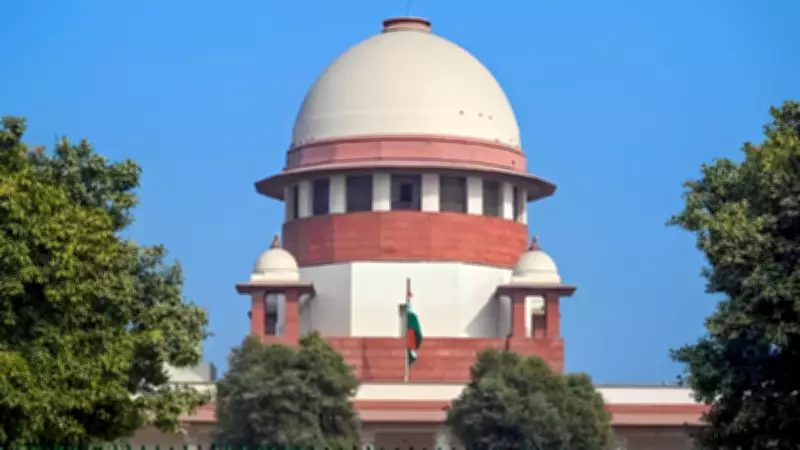
Supreme Court Raises Alarm Over Growing Freebies Culture Across States
The Supreme Court of India delivered a stern warning on Thursday, expressing profound concerns about the escalating culture of distributing 'freebies' by various state governments. The apex court cautioned that this indiscriminate practice could severely hamper economic development and place unsustainable strain on already fragile state finances.
Court Questions Financial Wisdom of Universal Free Schemes
During a hearing concerning Tamil Nadu Power Distribution Ltd's proposal to provide free electricity to all consumers regardless of financial status, a bench led by Chief Justice of India Surya Kant, alongside Justices Joymalya Bagchi and Vipul M Pancholi, raised fundamental questions about the economic wisdom behind such universal schemes. The bench emphasized that while welfare measures for the poor are justified and necessary, extending them indiscriminately to everyone could significantly weaken development efforts across the nation.
"Most states in the country are revenue deficit states and yet they are offering such freebies," the bench observed pointedly, highlighting the apparent contradiction between financial realities and political promises. The judges stressed that excessive spending on freebies could dramatically slow economic progress while reducing crucial funds available for infrastructure development, job creation, and long-term sustainable growth.

Concerns Over Impact on Work Culture and Productivity
The Supreme Court bench issued a particularly strong warning about how indiscriminate distribution of benefits could negatively affect productivity and reduce incentives to work across Indian society. "What kind of culture are we developing in India?" the bench questioned rhetorically during proceedings.
Chief Justice Surya Kant elaborated on this concern, asking: "The states should work to open avenues for employment. If you start giving free food from morning to evening then free cycle, then free electricity then who will work and then what will happen to the work culture?" This line of questioning reflects deeper anxieties about how welfare policies might inadvertently undermine the very work ethic necessary for economic advancement.
Court Questions Whether Freebies Constitute Appeasement Policy
In one of the most significant observations, the Supreme Court bench questioned whether distributing benefits without distinguishing between those who can afford them and those who cannot amounts to an "appeasing policy." The Chief Justice specifically asked: "But without drawing a distinction between those who can afford and those who cannot, you start distributing. Will it not amount to an appeasing policy?"
Justice Bagchi added crucial context to the discussion, noting that states must properly justify such expenditures in their formal budget proposals. "It's not one State we are talking about, it's about all States. It is planned expenditure. Why don't you make Budget proposals and give justification that this is my outlay on unemployment of people?" he questioned, emphasizing the need for transparency and accountability in financial planning.
Broader Implications Beyond Individual States
While the court issued formal notice to the Centre and other parties regarding the specific petition filed by the DMK government-run power utility challenging electricity rules, the bench clarified that its concerns extend far beyond Tamil Nadu alone. The Supreme Court emphasized that its observations apply comprehensively to all states offering similar schemes without proper financial planning and justification.
The court's intervention comes against a backdrop where freebies have increasingly become a major electoral strategy across political parties. A recent report by Aequitas Investments noted that "welfare schemes and 'freebies' have evolved from mere campaign promises to the new currency of political power," suggesting that competitive populism has reached unprecedented levels in Indian politics.

Fundamental Questions About Resource Allocation
Chief Justice Surya Kant posed a fundamental question about resource allocation that strikes at the heart of the freebies debate: "States are running into deficit but still giving freebies. See, 25 per cent of the revenue you collect in a year, why can it not be used for the development of the State?" This query highlights the tension between immediate political gratification through free distribution and long-term investment in developmental infrastructure.
The Supreme Court's observations represent a significant judicial intervention in the ongoing national debate about the economic sustainability of populist welfare measures. By questioning both the financial wisdom and broader societal impact of indiscriminate freebies, the court has initiated a crucial conversation about balancing immediate welfare needs with long-term economic development priorities.