Samik Bhattacharya: The BJP's Culturally Grounded Face in West Bengal
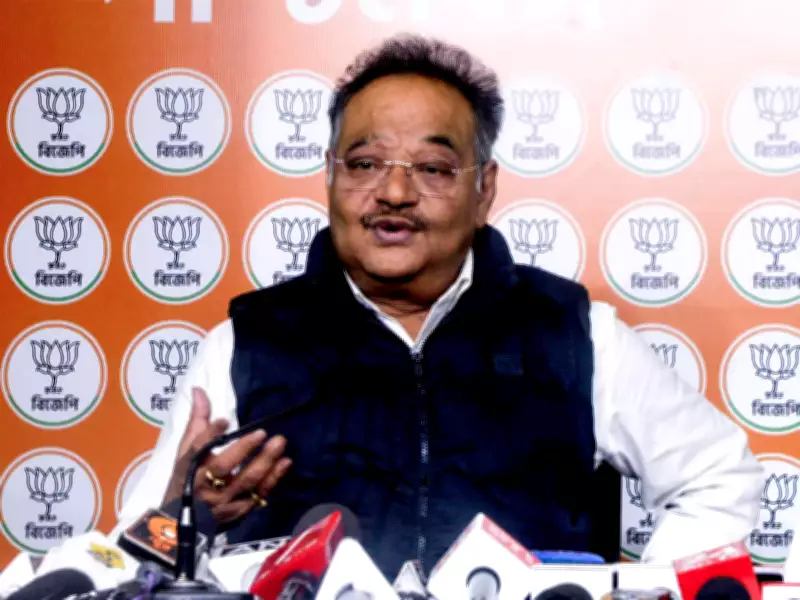
When asked if he is a film enthusiast, Samik Bhattacharya, the West Bengal BJP president, appears momentarily taken aback. In the midst of detailing celebrity campaigners for the BJP in the state, he offers a response that feels quintessentially Bengali. He expresses a greater comfort with theatre, recalling his active participation in less demanding times. This affinity for the stage aligns naturally with his appreciation for poetry and his admitted fondness for Shakti Chattopadhyay. In many ways, Bhattacharya seems more at home in a spirited Kolkata adda with intellectuals of diverse political views than some of his party counterparts.
Building a Bengal Model Rooted in Legacy
Bhattacharya's vision for Bengal's future is deeply connected to its past. He advocates for a Bengal model of development over a bulldozer approach, drawing inspiration from the legacies of Syama Prasad Mookerjee and Bidhan Chandra Roy, the state's first chief minister post-Independence and a prominent Congress leader. This historical grounding extends to his courteous demeanor toward political rivals. He describes Trinamool Congress leader Abhishek Banerjee as smart and articulate, a respectful assessment that transcends partisan lines.
Unrelenting Political Groundwork and Electoral Confidence
Despite his cultural refinement, Bhattacharya is unwavering in political execution. Operating from a modest Salt Lake apartment during the election season, he attentively listens to party workers discussing strategy, reinforcements, and solutions. When comparing the BJP's ground game to the Trinamool Congress's seasoned electoral machinery, he references 2011, when the TMC overcame organizational hurdles to unseat the Left Front. He emphasizes the BJP slogan framing the election as "Janata versus Mamata" and predicts a TMC wipeout in North Bengal, from Darjeeling to Malda.

Addressing alliances with figures like Bimal Gurung, who championed Gorkhaland, Bhattacharya adopts a careful stance. He acknowledges historical deprivation and cultural ridicule faced by hill communities, advocating for grievance resolution while firmly ruling out any partition of West Bengal. He candidly admits the BJP's past struggles in the Kolkata Presidency region, encompassing 109 seats, but insists on significant improvement this time, even suggesting Mamata Banerjee's Bhowanipore constituency could be highly competitive.
Governance Priorities and Electoral Allegations
Bhattacharya outlines clear priorities for a potential BJP government: enhancing law and order, restoring democracy, and re-establishing constitutional norms. He expresses dissatisfaction with the Special Intensive Revision of electoral rolls, alleging TMC pressure on poll and judicial officials, and claims Form 7 applications were burned with police inaction. These criticisms may channel anger among BJP supporters, including Matuas, over large-scale deletions.
On infiltration, he labels it an "international conspiracy" and calls for greater public awareness, while cautiously noting that no Indian Muslim should be unjustly removed from electoral rolls. Regarding welfare, he pragmatically states that Lakshmir Bhandar would not be scrapped under BJP rule but doubled and rebranded as Annapurna Bhandar, despite fiscal constraints. He dismisses claims about fish disappearing from Bengali diets with humor, joking about sending fish to the chief minister if the BJP wins.
Cultural Legitimacy and Political Strategy
Bhattacharya's approach blends blunt political messaging with layered cultural insights. He asserts that BJP governance would be firmer yet constitutional, with a focus on rebuilding sectors like education and health. With over four decades in the party, from explaining the difference between the Janata Party and BJP to now leading its charge in Bengal, he sees this as a pivotal moment. While pollsters project around 120 seats in the 294-member Assembly, he points to BJP overperformances in Haryana and Delhi, predicting a final Modi-Shah push will secure a majority.

Unlike mass crowd-pullers like Suvendu Adhikari or organizational stalwarts like Dilip Ghosh, Bhattacharya brings a language of civility, effortlessly quoting Tagore to navigate tough questions. In his writings, he contests the liberal or Left monopoly on Bengal's literary and civilizational icons, aiming to reposition cultural legitimacy within nationalist politics. He presents himself as a Bengali conservative—culturally literate, historically informed, and socially relatable.
Countering the Outsider Narrative
The Trinamool Congress has long portrayed the BJP as bohiragato zamindars, outsiders seeking to reshape Bengal's politics and culture. With Bhattacharya at the helm, the BJP hopes to mitigate this critique. Historically, the party has often seemed culturally external and emotionally distant in Bengal. Whether Bhattacharya can soften this perception may ultimately determine the BJP's success in challenging Mamata Banerjee's dominance.