Rahul Gandhi's 'PM Compromised' Allegations Trigger Lok Sabha Standoff
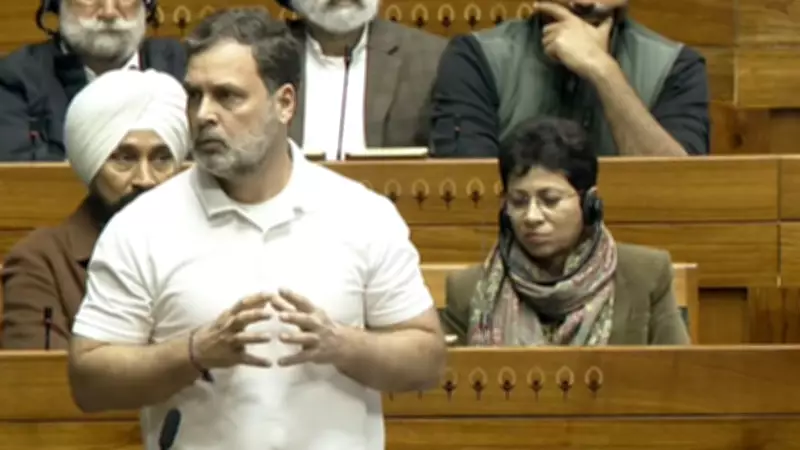
For the second consecutive day, Leader of Opposition Rahul Gandhi on Tuesday launched a sharp offensive against the Narendra Modi government, citing former Army chief General M M Naravane's unpublished memoir and other contentious issues. His remarks in the Lok Sabha have ignited a fierce standoff, resulting in the suspension of eight Congress MPs for the remainder of the Budget Session.
Gandhi's Three-Pronged Attack on Modi Government
In a strategic move, Gandhi aimed to weave together multiple threads to argue that Prime Minister Modi is compromised. His planned address focused on three key areas:
- General Naravane's Revelations: Gandhi sought to discuss the military face-off with China in eastern Ladakh in August 2020, as mentioned in Naravane's memoir, to critique the government's handling of national security.
- Epstein Files Controversy: He intended to link Modi's name to the Jeffrey Epstein case, referencing newly released US Justice Department files, despite the Ministry of External Affairs rejecting any impropriety.
- India-US Trade Deal: Gandhi alleged that the trade agreement was a sell-out by a compromised Prime Minister, harming Indian farmers and strategic autonomy by halting Russian oil purchases.
Outside Parliament, Gandhi asserted, "Modi is scared. The trade deal that was on pause for four months was suddenly clinched yesterday evening. Nothing has changed. Modi and I know the reason. There is tremendous pressure on Modi." He pointed to the Adani Group bribery case in the US and pending Epstein file disclosures as pressure points, claiming these compromise the PM's integrity.

Congress's Calculated Gamble and Opposition Dynamics
The Congress leadership appears to have taken a deliberate gamble by sharpening its attack, aiming to craft a new narrative that directly targets Prime Minister Modi. While some party leaders fear that disrupting the Lok Sabha and derailing discussions on the President's Address might alienate other Opposition parties, the strategy signals a shift from previous failed attempts to counter the BJP on nationalism.
Gandhi emphasized that the Naravane issue is a sideshow, with the core concern being a compromised Prime Minister. He lamented, "For the first time in history, the Leader of the Opposition was not allowed to speak in the President's Address," highlighting the escalating tensions in Parliament.
Broader Political Context and Future Implications
This episode marks a new turn in Gandhi's approach, moving away from earlier focuses on social justice and vote theft allegations that failed to gain traction. By bringing foreign policy, trade deals, and controversial files into the spotlight, the Congress aims to reshape public discourse ahead of key political battles.
As the Budget Session continues, the suspension of MPs and the heated exchanges underscore the deepening rift between the Congress and the Treasury Benches, with potential repercussions for coalition dynamics and legislative proceedings.