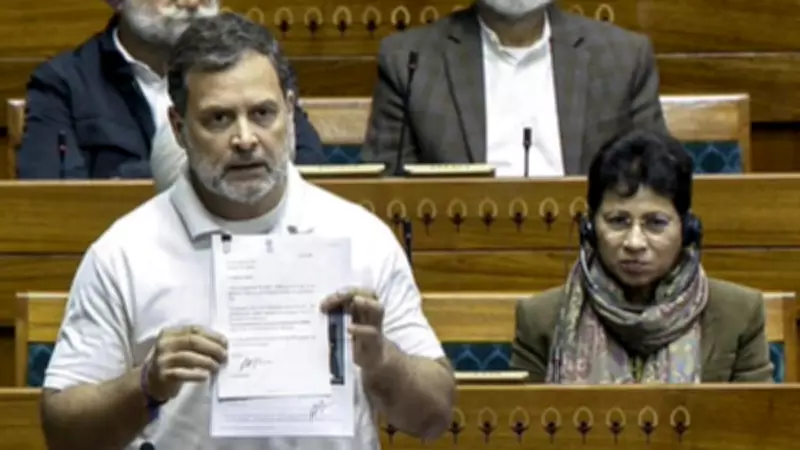
Rahul Gandhi Launches Scathing Attack on Lok Sabha Speaker Over Speaking Rights
Congress leader Rahul Gandhi has delivered a powerful condemnation of Lok Sabha Speaker Om Birla's decision to prevent him from speaking during parliamentary proceedings, labeling the action as a 'blot on democracy' and the 'strongest protest' against what he perceives as an assault on democratic norms. The incident, which unfolded in Delhi's parliamentary arena, has ignited fresh political controversy and raised significant questions about parliamentary decorum and opposition rights.
Gandhi's Dual Allegations: Epstein Files and Adani Case as 'Pressure Points'
In his remarks, Rahul Gandhi did not limit his criticism to the procedural issue alone. He strategically connected the parliamentary incident to broader national and international controversies, specifically mentioning two high-profile cases that he claims represent 'two pressure points' for Prime Minister Narendra Modi. The Congress leader pointed to the ongoing revelations in the Jeffrey Epstein files and the legal proceedings against the Adani Group in the United States as matters of significant concern that warrant parliamentary discussion.
Gandhi's reference to these cases suggests a calculated political strategy to broaden the narrative beyond the immediate parliamentary confrontation. By linking the Speaker's action to what he portrays as larger patterns of suppression and avoidance of uncomfortable topics, the opposition leader has attempted to frame the incident as symptomatic of deeper democratic erosion rather than merely a procedural dispute.

Parliamentary Procedure Versus Democratic Principles
The core of Gandhi's protest centers on what he perceives as a fundamental violation of parliamentary democracy's basic tenets. The prevention of an opposition leader, particularly the Leader of Opposition, from addressing the house represents, in his view, a dangerous precedent that undermines the very purpose of legislative debate and oversight. This confrontation highlights the ongoing tension between parliamentary majority control and minority rights that has characterized recent Indian political discourse.
Speaker Om Birla's decision, which prompted Gandhi's strong reaction, raises important questions about the balance between maintaining parliamentary discipline and ensuring adequate space for opposition voices. The incident has sparked debate among constitutional experts and political observers about where exactly that balance should lie in a vibrant democracy like India's.
Political Implications and Broader Context
This parliamentary confrontation occurs against a backdrop of heightened political polarization in India, where procedural disputes often carry significant symbolic weight. Gandhi's characterization of the incident as the 'strongest protest' suggests that the Congress party views this as a defining moment in their opposition strategy, potentially marking a more confrontational approach to parliamentary engagement.
The reference to international cases like the Epstein files and Adani's US legal troubles indicates an attempt to internationalize the criticism and connect domestic parliamentary procedures to global accountability standards. This multidimensional approach allows Gandhi to appeal to both domestic democratic concerns and international governance expectations simultaneously.
As the political fallout continues to unfold, this incident serves as a reminder of the delicate balance required in parliamentary democracies between majority governance and minority representation. The strong language used by Rahul Gandhi, including terms like 'blot on democracy', ensures that this parliamentary moment will resonate beyond the immediate political cycle and contribute to ongoing debates about the health of India's democratic institutions.