

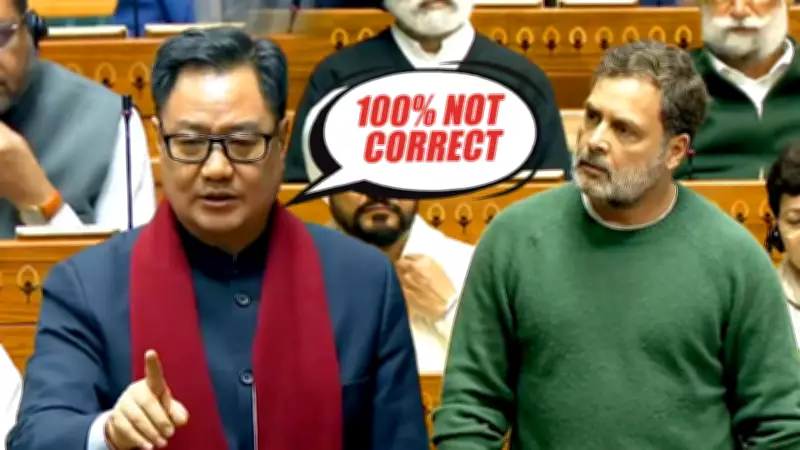
Parliamentary Showdown Erupts Over Speaker's Alleged Commitment
In a dramatic confrontation in the Lok Sabha, Leader of Opposition Rahul Gandhi and Parliamentary Affairs Minister Kiren Rijiju clashed over whether the Speaker had personally committed to allowing Gandhi to speak before budget discussions. The heated exchange highlighted ongoing tensions in parliamentary proceedings and raised questions about procedural assurances.
Gandhi's Claim: Personal Assurance Withdrawn
Rahul Gandhi stood firm in the House, asserting that the Speaker had given him a personal assurance that he would be permitted to raise important points before the budget discussion commenced. Gandhi emphasized that this commitment was made directly to him, suggesting a breach of parliamentary trust when the opportunity was subsequently denied. His insistence on speaking reflected the Opposition's demand for proper representation and adherence to promised procedures in legislative business.
Rijiju's Counter: Clarifying Parliamentary Procedure
Responding to Gandhi's allegations, Parliamentary Affairs Minister Kiren Rijiju provided a detailed clarification regarding the Speaker's position. Rijiju stated that the Speaker was actively working to resolve the deadlock and ensure the smooth functioning of the House. He explained that discussions had taken place in the Speaker's chamber, where it was made clear that there was no unconditional commitment to allow only Rahul Gandhi to speak.

According to Rijiju, the Speaker had indicated that if an agreement could be reached among all political parties, then Gandhi, along with leaders from other parties, would be given a chance to address the House. The minister stressed that the Speaker had not reneged on any promise but was instead acting in strict accordance with established parliamentary procedure and the need for consensus among diverse political groups.
Broader Implications for Parliamentary Functioning
This confrontation underscores the delicate balance between individual parliamentary privileges and collective decision-making in India's legislative processes. The incident raises important questions about:
- Communication protocols between the Speaker and opposition leaders
- Procedural transparency in scheduling parliamentary debates
- Consensus-building mechanisms among political parties
- Accountability measures for parliamentary assurances
The exchange between Gandhi and Rijiju reflects broader tensions in Indian politics, where opposition parties frequently raise concerns about being marginalized in parliamentary proceedings. As budget discussions loom, such conflicts highlight the challenges of maintaining decorum while ensuring all voices are heard in the democratic process.
This incident serves as a reminder of the importance of clear communication and adherence to procedural norms in parliamentary democracy, where misunderstandings can quickly escalate into public confrontations that affect legislative productivity and political discourse.






