Rahul Gandhi's Symbolic Parliament Gesture with Military Memoir Ignites Debate
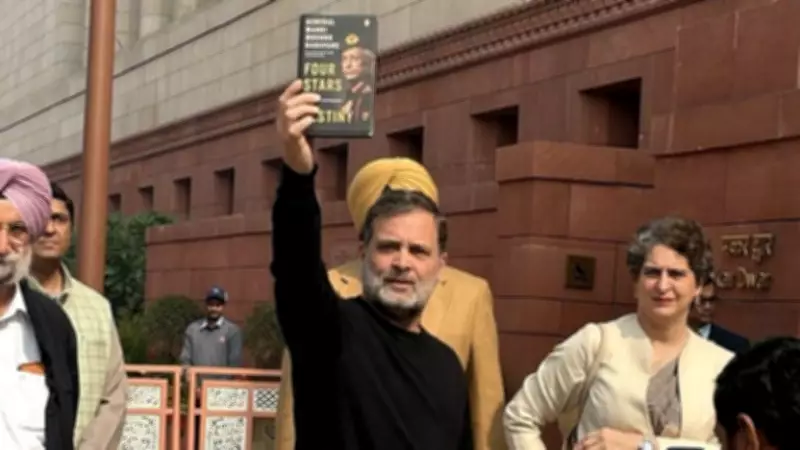
In a dramatic move that has stirred the political landscape, Congress leader Rahul Gandhi made a pointed entry into Parliament on Wednesday, carrying a memoir authored by a former Chief of the Army Staff. The gesture was laden with symbolism, as Gandhi announced his intention to personally hand over the book to Prime Minister Narendra Modi, while simultaneously launching a sharp critique of the PM's leadership.
A Calculated Political Statement
As he approached the hallowed halls of the Indian Parliament, Rahul Gandhi was seen holding the memoir prominently, ensuring it was visible to the media and onlookers. This was not a casual act but a meticulously planned political statement aimed at highlighting what the Congress perceives as critical failures in the current administration's approach to national security and governance.
Addressing reporters outside Parliament, Gandhi did not mince words. He stated, "I am going to give this book to the Prime Minister." This declaration was accompanied by a more direct accusation, as he asserted that Prime Minister Modi lacks the guts to address pressing issues facing the nation. The choice of a former Army chief's memoir as the prop for this message was particularly significant, suggesting an appeal to military ethos and discipline in contrast to the political leadership.
The Context and Implications
The incident comes at a time of heightened political tensions, with the opposition consistently targeting the government over various policy matters, including defense strategies and national security. By invoking the authority of a former military leader through his memoir, Rahul Gandhi aimed to lend gravitas to his critique, implying that the concerns raised in the book resonate with broader anxieties about the current administration's resolve.
Political analysts note that such gestures are part of a larger strategy by the Congress to challenge the BJP-led government's narrative on strength and decisiveness. The use of a military figure's writings adds a layer of non-partisan credibility to the attack, potentially appealing to voters who value national security above political affiliations.
Reactions and Broader Political Dynamics
While the BJP has yet to issue an official response to Gandhi's specific comments, sources within the party have dismissed the act as a publicity stunt aimed at diverting attention from the Congress's own internal challenges. However, the imagery of a senior opposition leader carrying a military memoir into Parliament is likely to dominate news cycles and social media discussions in the coming days.
This episode underscores the ongoing war of words and symbols in Indian politics, where every action is scrutinized for its deeper meaning. It also reflects the personalization of political rivalries, with direct challenges being issued between top leaders. As the monsoon session of Parliament progresses, such confrontations are expected to intensify, setting the stage for further debates on governance and leadership.
In summary, Rahul Gandhi's entry into Parliament with the ex-Army chief's memoir has not only provided a visual spectacle but has also reignited discussions about political courage and accountability. Whether this move translates into substantive political gains remains to be seen, but it has certainly added a new dimension to the ongoing political discourse in India.