Congress Leader Rahul Gandhi Launches Scathing Attack on Centre Over MGNREGA Changes
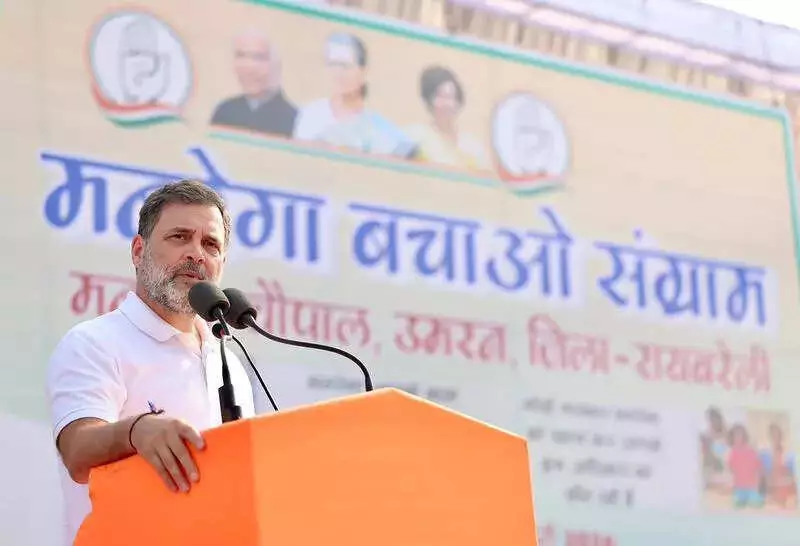
During a significant two-day visit to his parliamentary constituency of Rae Bareli, Congress MP and Leader of Opposition Rahul Gandhi delivered a powerful critique of the Narendra Modi-led government's approach to rural welfare schemes. The focal point of his criticism was the recent restructuring and renaming of the Mahatma Gandhi National Rural Employment Guarantee Act (MGNREGA), which he described as a direct insult to the Father of the Nation.
Allegations of Centralization and Weakened Safeguards
Addressing party workers and villagers at the inaugural MGNREGA Chaupal event, Gandhi asserted that the transformation into the VB-G RAM G scheme represents a dangerous shift in policy direction. The Congress leader emphasized that the revised framework removes crucial financial protections that previously safeguarded marginalized workers under the original MGNREGA legislation.
"The BJP government has not only insulted Mahatma Gandhi but is systematically attacking the foundational principles of our democracy," Gandhi declared. He argued that welfare programs should be implemented at the panchayat level, with village heads holding accountability for financial decisions, rather than being managed centrally from Delhi or Lucknow.

Concerns About Funding Diversion and State Burden
Gandhi raised specific concerns about the financial implications of the VB-G RAM G Act, which guarantees 125 days of wage employment to rural households. He alleged that the revised scheme shifts a substantial portion of the financial burden onto state governments, potentially creating implementation challenges.
The Congress MP went further to claim that the Modi administration intends to divert funds meant for rural laborers to benefit a select group of industrialists, specifically naming Gautam Adani and Mukesh Ambani. "While we are committed to protecting the people, Narendra Modi is concentrating wealth in the hands of a privileged few," Gandhi stated. "The financial resources that should rightfully support laborers must not be redirected to large corporate entities."
Warning About Implementation Challenges
Gandhi issued a warning regarding potential resistance from BJP-ruled states, suggesting they might refuse to provide their mandated 40% share of funding under the VB-G RAM G Act. This could significantly undermine the effectiveness of the entire scheme, leaving rural workers without the employment security they desperately need.
The Congress leader passionately defended the original MGNREGA framework as a panchayat-based program that effectively protected poor workers while promoting local governance. He accused the central government of attempting to dismantle a program that has provided wage security to millions of rural households across India.
Broader Political Context and Campaign Launch
Gandhi framed the issue within a larger constitutional and historical context, stating, "This is fundamentally a fight to protect our Constitution and the rights of workers. Modi and the RSS appear determined to take India back to the pre-Independence era, where people's land and resources could be easily handed over to corporate interests."
In response to these concerns, the Congress party has launched a nationwide MGNREGA Bachao Sangram campaign, scheduled to run from January 10 to February 25. This initiative aims to restore the original scheme and mobilize public opinion across the country regarding the importance of rural employment guarantees.
Constituency Engagement and Grassroots Outreach
Beyond the political discourse, Rahul Gandhi's visit to Rae Bareli included substantial grassroots engagement activities. He inaugurated a local cricket tournament, emphasizing community participation and youth involvement. The Congress leader also held detailed meetings with party office-bearers and workers at the Bhuyemau guest house, reinforcing his commitment to direct constituency outreach alongside the broader national campaign.

The visit underscores the continuing political significance of Rae Bareli as a Congress stronghold and highlights the party's strategy of combining local engagement with national policy criticism as the political landscape evolves.