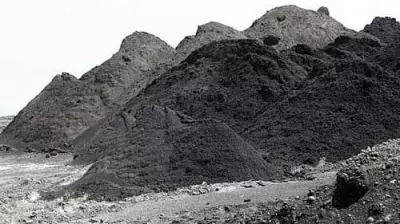
Standing under the shade of a Bakain tree on a scorching day at 46°C, I observe canal water irrigating my field — a toxic slurry of sewage and chemical effluents discharged from the Buddha Nullah. This is the water that flows into our taps too, serving as a grim symbol of Punjab’s deep malaise and current electoral predicament.
Punjab’s Debt Trap: Interest Payments Exceed Education and Health Spending
Inconvenient truths require inconvenient truth-tellers. Leaders in states such as Punjab and Kerala know but ignore what the electorate fails to realise: the states are sliding towards balance-sheet insolvency, not just periodic liquidity crunch. Punjab is allowed to have net borrowing of Rs 29,419 crore (3% of Gross State Domestic Product as per the Fiscal Responsibility and Budget Management Act), while the state’s revenue deficit stands at Rs 21,955 crore (2.2% of GSDP). The underlying calculation is unforgiving, making the endgame a simple question of timing, not probability. Possibly within four years, after repaying principal and interest, paying salaries, providing free electricity and handouts to women, there may not be enough money to fulfil pension obligations.
Annual interest payment consumes 40.58% of the state’s own tax revenue. Punjab is now spending four times more on servicing its existing debt than on creating assets. This is the classic debt trap. Unfortunately, governments routinely alleviate a debt problem by borrowing more money just to service existing interest obligations. When analysing the debt crisis, I subscribe to the theory that politicians lacking strength of character and integrity ultimately represent the gravest financial liability.

Historic Mandate Wasted: Punjab’s Debt Set to Rise by 64%
It’s true that the economic bequest to the AAP government was not good. The state’s outstanding debt was Rs 2.85 lakh crore on March 31, 2022. Since then, this government has wasted its historic mandate, making mistakes not by accident but out of political compulsion. The state’s outstanding debt is expected to increase by 64% to reach Rs 4.5 lakh crore by March 31, 2027.
A government’s fiscal position is a volatile mix of politics, economics, finance, law, and leadership that enables this cycle. Step into any mohalla in Punjab and ask what the government stands for, and the answers pour out in a torrent: free electricity, cash doles, unconstitutional halqa incharges, drugs, petty crime, a compromised police force, and corruption. All are present in ample measure, yet none offer any cause for pride. It is not a partisan issue: politicians unable to win public trust on their own merits routinely embark on expensive crusades to broadcast their benevolence.
Populist Handouts Borrowed from Future Generations
All major parties enter elections by promising unsustainable populist handouts, systematically borrowed from future generations to fund the politics of today. Punjab’s debt-to-GSDP ratio (45.65%) is the highest among major states. Leave apart debt repayment, Punjab spends more on interest payments (Rs 28,775 crore) than it does on education and health combined. Ultimately, controlling a state’s budget will alienate powerful organised blocs like government staff and farmers. The task will require a rare political commodity: a statesman with the sheer capacity to absorb public hatred. In a state where politics revolves around blaming the Central government or exploiting religious fault lines at every turn, reality is finally exacting its revenge.
External Help Needed: The BJP’s Leverage
No state can survive in political isolation, least of all Punjab. In the throes of societal and fiscal collapse, the state cannot pull itself out of the hole without external help. To make matters worse, the current regime has adopted AAP’s Delhi playbook, picking fights with the Centre at every turn to the absolute detriment of the state. In today’s adversarial and performative politics of the country, a Congress victory would produce the same deadlock. For Punjab to reverse the trajectory of decline, whoever wins the 2027 election will need the cooperation of the Union government — otherwise, the state will sink further into a disaster of its own making.

This isn’t just an autopsy of Punjab’s present; the worst of the crisis is ahead of us. There is also a demographic challenge: people are migrating out of Punjab in droves — to other countries and states, reducing the population to around 2.5 crore. Thus, each child born in the state carries a debt burden of Rs 1.8 lakh.
Political Vacuum and the Rise of BJP
Heraclitus said, “You cannot step into the same river twice”, a fitting metaphor for the state’s electorate that has cycled through the Shiromani Akali Dal, the Congress, and AAP, only to be failed by each. Allegations of corruption and misdeeds shadow the career paths of most of Punjab’s leaders across political lines. All of this points to one brutal truth: in this vacuum of credible leadership options and a deep financial crisis in the state, the BJP has arrived, perhaps less convincingly than it believes, but armed with the formidable leverage of the Central coffers to revive the state’s fortunes. The sobering implications of this ascension are many. A state that does not shape its own future will eventually have one imposed upon it.
Once a paradise, Punjab’s potential has been squandered by its politicians who prioritise a system focused on winning elections rather than governing well. We are still awaiting answers to the very questions AAP raised when voters overwhelmingly handed them power in 2022. The present chief minister rose to power by mocking the system’s deep hypocrisies, yet he has ultimately come to embody them. Much like his predecessors, his true legacy will be the compounding polycrisis — one that has deeply fractured Punjab’s body and soul. Punjab is not just the land of five rivers — it is where all political lives end in failure.