Political Deaths in Crashes: A Legacy of Reshaping Indian Politics
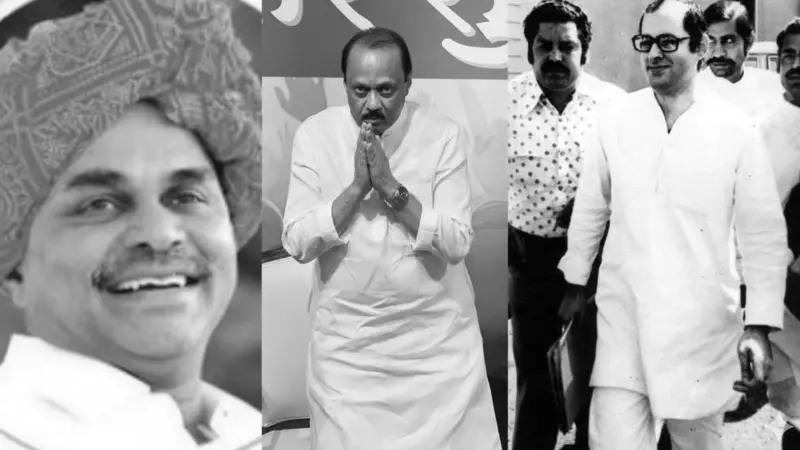
The untimely demise of high-profile political figures in plane crashes and road accidents has often served as a catalyst for profound reconfigurations in state politics and party structures across India. The recent death of Maharashtra Deputy Chief Minister Ajit Pawar in a plane crash on Wednesday morning has once again thrust this phenomenon into the spotlight, raising critical questions about the future of his Nationalist Congress Party (NCP) and the uncertain prospects of merging with the NCP (SP) led by his uncle Sharad Pawar.
Recent Impact: Ajit Pawar's Death and Maharashtra Politics
Ajit Pawar's passing not only throws the NCP's stability into doubt but also potentially reshapes the political landscape of Maharashtra. His absence may lead to power vacuums, internal party struggles, and shifts in alliances, echoing similar patterns seen in other states following such tragedies.
Historical Cases of Political Deaths in Crashes
Over the years, several prominent leaders have met tragic ends in accidents, each leaving a distinct mark on Indian politics:

- Vijay Rupani (2025): The former Gujarat Chief Minister died in an Air India aircraft crash shortly after takeoff from Ahmedabad. A BJP leader from the Baniya community, Rupani had stabilized the party in Gujarat post-Patidar agitation but was not actively involved in state politics at his death, serving as BJP in-charge for Punjab and Chandigarh.
- Dorjee Khandu (2011): The former Arunachal Pradesh Chief Minister perished in a helicopter crash in bad weather near the Sela Pass. A Congress leader, his son Pema later switched to the BJP and currently serves as the state's CM, illustrating how such events can influence political lineages and party affiliations.
- Y S Rajasekhara Reddy (2009): Known as YSR, the Andhra Pradesh CM died when his helicopter crashed in the Nallamala forest. His death had a massive impact on the Congress, contributing to its decline in the state, especially as the Telangana movement gained momentum. His son Y S Jagan Mohan Reddy broke away to form his own party, governing from 2019 to 2024.
- O P Jindal and Surender Singh (2005): Haryana Power Minister Om Prakash Jindal and Agriculture Minister Surender Singh died together in a helicopter crash, highlighting how such incidents can affect multiple political figures simultaneously.
- G M C Balayogi (2002): The Lok Sabha Speaker and TDP leader died in a helicopter crash due to a technical snag. His son G M Harish continues the political legacy as a TDP MP.
- Madhavrao Scindia (2001): A senior Congress leader and former Civil Aviation Minister died in a plane crash en route to Kanpur. His son Jyotiraditya initially filled the vacuum but later joined the BJP, now serving as a Union Cabinet Minister.
- Sanjay Gandhi (1980): The Congress leader and son of Prime Minister Indira Gandhi died in a plane crash while co-piloting in Delhi. His death brought Rajiv Gandhi to prominence and sidelined Sanjay's family, with his wife Maneka and son Varun joining the BJP.
Road Accidents and Political Repercussions
Beyond plane crashes, road accidents have also claimed political lives, leading to significant changes:

- Rajesh Pilot (2000): The former Deputy CM and Congress leader died in a jeep-bus collision in Rajasthan. His son Sachin Pilot took over his mantle, becoming a key leader in the Rajasthan Congress and playing a crucial role in the party's 2018 victory.
- Gopinath Munde (2014): The BJP's OBC face in Maharashtra died in a road accident in New Delhi. His death led to a decline in the Munde family's fortunes and internal feuds, with neither his daughter Pankaja nor nephew Dhananjaya matching his stature.
Conclusion: The Enduring Impact of Tragic Deaths
These cases underscore how the sudden deaths of political leaders in crashes can trigger power shifts, party realignments, and long-term political transformations. From Sanjay Gandhi's death reshaping the Congress leadership to YSR's demise affecting Andhra Pradesh's political landscape, such events continue to influence Indian politics, as seen with Ajit Pawar's recent passing. The legacy of these tragedies serves as a reminder of the fragile nature of political stability and the enduring impact of unforeseen events on the nation's democratic fabric.