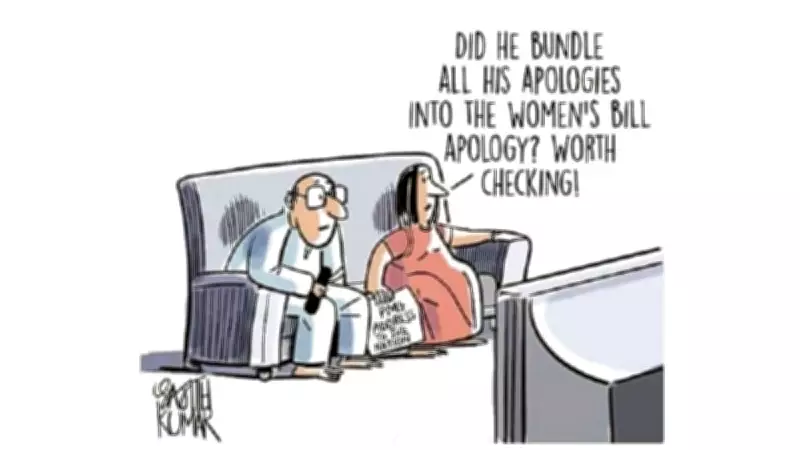
Deccan Herald Cartoon Mocks the Proliferation of Political Apologies
A recent editorial cartoon published by Deccan Herald has sparked discussion by satirizing the growing culture of political apologies in India. The artwork, titled "Bundle of Apologies," uses sharp humor to critique how politicians frequently issue regrets for controversies, often perceived as insincere or strategic moves rather than genuine remorse.
Artistic Critique of Insincere Regrets
The cartoon depicts a scene where political figures are shown offering bundles of apologies, symbolizing the repetitive and formulaic nature of such statements. Through exaggerated visuals, it highlights the public's growing skepticism towards these apologies, which are often seen as attempts to deflect criticism or manage media narratives rather than address underlying issues.
Key elements of the satire include:

- Visual metaphors for the abundance of apologies in political discourse.
- A commentary on the performative aspect of public apologies by leaders.
- Reflection of widespread cynicism among citizens regarding political accountability.
Context and Public Reaction
This cartoon emerges against a backdrop of numerous high-profile apologies from politicians across party lines for various missteps, ranging from offensive remarks to policy failures. Observers note that such apologies have become a common tool in political communication, but their effectiveness is often questioned due to perceived lack of follow-up actions or sincerity.
Public and expert opinions suggest:
- Cartoons like this serve as a mirror to society, amplifying voter frustrations.
- They encourage critical thinking about the role of apologies in democratic processes.
- The artwork has been shared widely on social media, indicating resonance with audiences tired of political theatrics.
In summary, the Deccan Herald cartoon not only provides a humorous take but also prompts deeper reflection on the state of political accountability and public trust in India. By using satire, it underscores the need for more substantive actions beyond mere words of apology in governance.