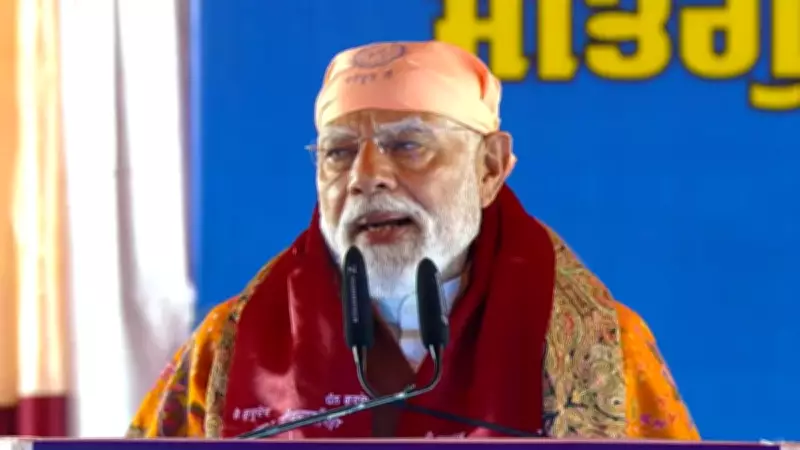
In a significant move that honors spiritual heritage and social reform, Prime Minister Narendra Modi has officially renamed Adampur Airport in Punjab after the revered saint Guru Ravidas. This decision underscores the government's commitment to celebrating India's diverse cultural icons and their enduring impact on society.
A Tribute to Guru Ravidas's Legacy
Guru Ravidas, a 15th-century saint-poet and social reformer, is widely respected for his teachings that emphasized equality, compassion, and the unity of all people, transcending caste and social barriers. His profound influence continues to inspire millions across India and beyond, making this renaming a poignant recognition of his contributions to social harmony.
PM Modi's Emphasis on Social Unity
During the announcement, Prime Minister Modi highlighted how Guru Ravidas played a pivotal role in uniting society through his spiritual messages and humanitarian efforts. He noted that the saint's teachings remain relevant today, promoting values of inclusivity and brotherhood in a diverse nation like India.
This renaming is not merely a symbolic gesture but a step towards embedding these timeless principles into public infrastructure, fostering a sense of pride and historical awareness among citizens.
Impact on Punjab and Beyond
Adampur Airport, located in the Jalandhar district of Punjab, serves as a key regional hub for air travel, connecting the state to various domestic destinations. By associating it with Guru Ravidas, the government aims to elevate the airport's cultural significance, potentially boosting tourism and local pride.
The move has been welcomed by many in Punjab, where Guru Ravidas holds a special place in the hearts of devotees, particularly among the Dalit and other marginalized communities who revere him as a beacon of social justice.
Broader Implications for National Identity
This initiative aligns with a series of recent efforts by the Indian government to rename public spaces after historical and spiritual figures, reflecting a broader narrative of honoring India's rich heritage. It reinforces the idea that infrastructure development can go hand-in-hand with cultural preservation, creating a more inclusive national identity.
As India continues to modernize, such gestures serve as reminders of the country's deep-rooted traditions and the leaders who shaped its social fabric, encouraging future generations to uphold these values.