

Padma Awards 2026 Unveil Cross-Ideology Strategy with Kerala at the Forefront
The announcement of the Padma Awards 2026 has sparked significant political discourse, revealing a deliberate strategy of cross-ideological outreach by the government. This year's honors extend across party lines, recognizing figures from the CPI(M), Jharkhand Mukti Morcha (JMM), and the Bharatiya Janata Party (BJP), signaling a nuanced approach to national recognition.
Geographical Distribution and Poll-Bound States
A notable pattern emerges in the distribution of awardees, with a substantial number hailing from key poll-bound states. Kerala leads with eight awardees, followed closely by Tamil Nadu with thirteen and West Bengal with eleven. This geographical focus underscores the political undercurrents of the awards, potentially influencing upcoming electoral dynamics in these regions.
Kerala's Dominance in Padma Vibhushan Awards
Of the five Padma Vibhushans conferred this year, three have been awarded to individuals from Kerala, highlighting the state's prominence in the civilian honors list. Among these is the posthumous award to former Chief Minister and CPI(M) stalwart V.S. Achuthanandan, who passed away last year. His son, V.A. Arun Kumar, expressed the family's pride, stating, "It is a recognition from the country. It is priceless and the family takes that honour with great pleasure."

Political Rivalries and Recognition
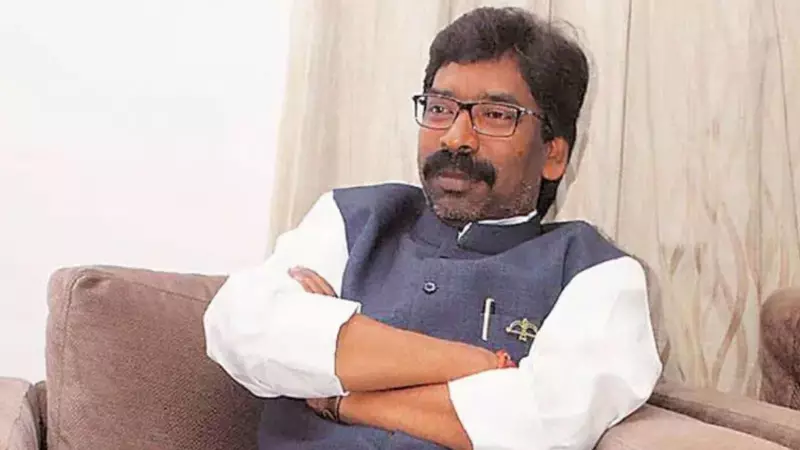
The posthumous awards for Achuthanandan and former Jharkhand Chief Minister Hemant Soren of the JMM are interpreted as part of a broader cross-ideology message. Achuthanandan, known for his rebellious stance and principled stands often at odds with party leadership, had a well-documented feud with current Kerala Chief Minister Pinarayi Vijayan. This rivalry escalated in 2007 when the CPI(M) removed Achuthanandan from the Politburo, a rare disciplinary action, while also suspending Vijayan, both of whom were reinstated six months later.
Significant Awards and Community Leaders
Another politically significant award is the Padma Bhushan conferred upon Vellappally Natesan, general secretary of the Sree Narayana Dharma Paripalana (SNDP) Yogam and a leader of the backward Hindu Ezhava community in Kerala. Natesan, who has faced criticism for anti-Muslim remarks, recently called for Hindu unity in Kerala and is perceived to be aligning with the Left government led by Pinarayi Vijayan, predicting the Chief Minister's return for a third term. Interestingly, Natesan had previously expressed skepticism about the value of Padma awards, stating in an interview, "I do not want Padma Bhushan... What value does it have? It has become a thing that can be purchased. There was a time when it had value."
RSS Influence and Literary Contributions
Senior RSS leader P. Narayanan, aged 90, received the Padma Vibhushan in the field of literature and education. Narayanan served as a pracharak in North Kerala for several years and was the chief editor of the Sangh Parivar-backed Malayalam daily Janmabhoomi, as well as the state convener of the Swadeshi Jagran Manch, highlighting the ideological diversity in this year's awards.
Posthumous Honors and Political Contexts
The late Hemant Soren's Padma Bhushan comes about two years after his son, JMM leader Shibu Soren, was jailed, followed by the BJP's defeat in the Jharkhand Assembly elections. Similarly, the late V.K. Malhotra, a veteran from the Jana Sangh days and a five-time MP who defeated Dr. Manmohan Singh in the 1999 Lok Sabha elections, was posthumously awarded the Padma Bhushan for public affairs. Former Uttarakhand Chief Minister and ex-Maharashtra Governor Bhagat Singh Koshyari also received the Padma Bhushan, recalling his role during the collapse of the Maha Vikas Aghadi government in 2022.
Beyond Overt Political Figures
The political messaging extends beyond overt political figures, as seen with the Padma Vibhushan conferred on the late Hindi film star Dharmendra, who also served as a BJP MP. Dharmendra's iconic status in Punjab, his native state, and among Sikhs and Jats across Haryana, western Uttar Pradesh, and Rajasthan, is notable given the BJP's challenges in Punjab and concerns over Jat support due to past farm agitations.

Historical Precedents and Strategic Awards
This cross-ideology approach is not unprecedented. Towards the end of Prime Minister Narendra Modi's second term in early 2024, a series of Bharat Ratna awards were announced across ideological lines. BJP veteran L.K. Advani received the honor amid the Ram temple inauguration news, while former Prime Minister P.V. Narasimha Rao was posthumously awarded, seen as a snub to the Congress. Similarly, the Bharat Ratna for former Prime Minister Chaudhary Charan Singh was announced during perceived Jat discontent, leading to his grandson Jayant Chaudhary joining the NDA. The award to former Bihar Chief Minister Karpoori Thakur, a social justice icon, coincided with opposition demands for a caste census, bolstering the NDA's social justice pitch.
In summary, the Padma Awards 2026 reflect a strategic blend of cross-ideological outreach and geographical focus, with Kerala playing a central role. The honors acknowledge diverse political and community leaders, weaving a complex tapestry of recognition that resonates with both historical precedents and contemporary political narratives.





