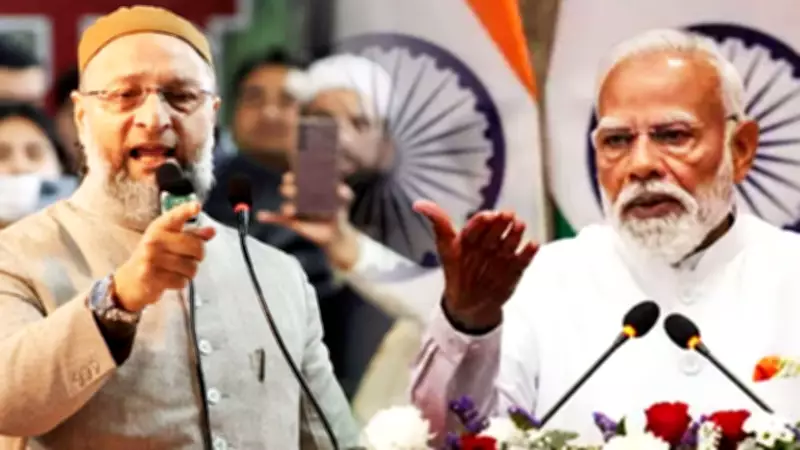
Owaisi Challenges Modi Government Over Iran Response, Criticizes West Asia Stance
A significant political controversy has emerged regarding India's diplomatic approach to the intensifying West Asia conflict. All India Majlis-e-Ittehadul Muslimeen (AIMIM) president Asaduddin Owaisi has publicly challenged the central government's handling of recent attacks on Iran, demanding clarity on why India has refrained from issuing a clear condemnation.
Questioning Diplomatic Silence and International Law
Owaisi specifically referenced Prime Minister Narendra Modi's recent conversation with Iranian President Masoud Pezeshkian, arguing that mere diplomatic engagement is insufficient. He emphasized that India should have adopted a more robust position in defense of international legal principles and national sovereignty. The AIMIM leader contended that silence in such critical matters undermines India's global standing and moral authority.
Scrutiny of Broader Diplomatic Engagements
Beyond the Iran issue, Owaisi raised pointed questions about India's diplomatic interactions with other key international figures during this crisis period. He highlighted engagements with leaders such as former US President Donald Trump and Israeli Prime Minister Benjamin Netanyahu, suggesting these relationships require careful examination given the complex geopolitical landscape. This scrutiny comes at a time when India's foreign policy decisions are under increasing domestic and international observation.

Geopolitical Context and Regional Implications
The political commentary surfaces against a backdrop of heightened tensions in West Asia, characterized by military exchanges involving Iran, Israel, and United States forces. This volatile situation has generated worldwide apprehension concerning multiple critical areas:
- Maritime security in strategic waterways
- Global energy supply chains and oil prices
- Broader economic stability and market confidence
India maintains substantial strategic and energy interests in the region, making developments there particularly consequential for national security and economic planning. The government is monitoring the situation closely as it evolves, balancing diplomatic relationships with practical national interests.
Broader Political and Strategic Considerations
Owaisi's intervention adds to an ongoing debate about India's foreign policy direction under the current administration. Critics argue for more principled positions on international conflicts, while supporters emphasize pragmatic diplomacy that protects national interests. The West Asia crisis presents a complex challenge where India must navigate relationships with multiple conflicting parties while safeguarding its own strategic and economic priorities in a region crucial for energy imports and regional stability.