Opposition Coalition Launches Constitutional Challenge Against Chief Election Commissioner
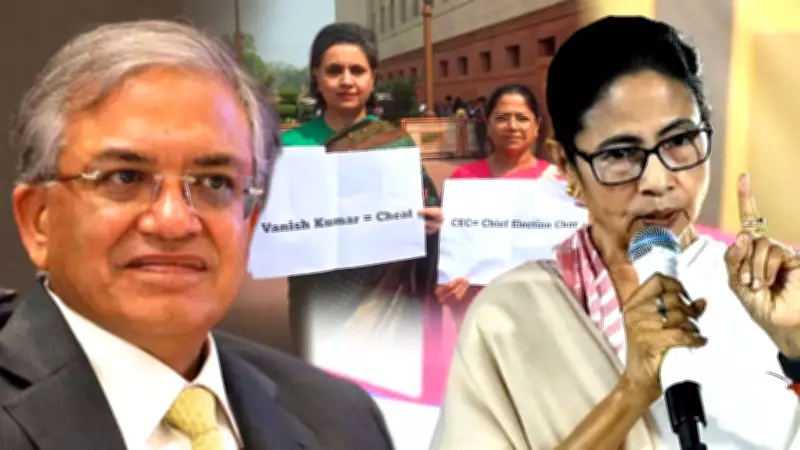
India's political arena has been thrust into turmoil as a formidable coalition of opposition parties has formally initiated an impeachment proceeding against Chief Election Commissioner Gyanesh Kumar. This unprecedented constitutional move follows escalating tensions over the Election Commission's Systematic Revision of Electoral Rolls (SIR) exercise, which opposition leaders claim has resulted in the wrongful removal of legitimate voters from electoral lists.
Impeachment Notice Filed in Parliament with Cross-Party Support
The impeachment notice has been officially submitted to both houses of Parliament—the Lok Sabha and the Rajya Sabha—garnering support from more than 180 Members of Parliament representing various opposition factions. This significant parliamentary action marks one of the most serious challenges to the Election Commission's authority in recent history.
The impeachment bid is being spearheaded by the All India Trinamool Congress (TMC), with substantial backing from major national and regional parties including the Indian National Congress, Samajwadi Party, Dravida Munnetra Kazhagam (DMK), and the Nationalist Congress Party faction led by veteran politician Sharad Pawar.

Allegations of Voter Deletions Spark Constitutional Crisis
Opposition leaders have leveled serious allegations against the Election Commission, asserting that the voter roll revision process has systematically excluded genuine voters, particularly in politically sensitive states. West Bengal Chief Minister Mamata Banerjee has been particularly vocal, repeatedly raising concerns about what she describes as "targeted voter deletions" in her state ahead of crucial assembly elections.
The controversy centers on whether the Election Commission's actions have compromised the fundamental democratic principle of universal adult suffrage, with opposition parties arguing that the integrity of the electoral process is at stake.
Complex Constitutional Process for Removal
Under Article 324 of the Indian Constitution, removing a Chief Election Commissioner requires an elaborate impeachment process that mirrors the procedure used for Supreme Court judges. This involves:
- A formal motion of impeachment supported by at least 100 members of the Lok Sabha or 50 members of the Rajya Sabha
- Investigation by a committee of Parliament
- A two-thirds majority vote in both houses of Parliament
- Final approval by the President of India
This constitutional safeguard ensures that election commissioners enjoy substantial independence, making their removal exceptionally difficult and politically charged.
Political Implications and Electoral Context
The impeachment motion arrives at a critical juncture in India's electoral calendar, with several states preparing for assembly elections. The controversy has intensified political polarization and set the stage for a major constitutional confrontation between the ruling establishment and opposition forces.
Political analysts suggest this move represents a strategic escalation by opposition parties to highlight what they perceive as institutional bias in election administration. The timing of the impeachment bid, coinciding with election preparations in multiple states, ensures the issue will remain at the forefront of political discourse in the coming months.
Broader Ramifications for Democratic Institutions
This constitutional challenge raises fundamental questions about the independence of India's election management body and the mechanisms for holding constitutional authorities accountable. The outcome of this impeachment effort could establish important precedents for:
- The relationship between elected representatives and constitutional authorities
- Standards for election administration and voter registration
- Parliamentary oversight of independent institutions
- The balance between institutional autonomy and political accountability
As the impeachment process unfolds, it promises to become one of the most significant constitutional battles in recent Indian political history, with implications extending far beyond the immediate controversy over voter rolls.