Opposition and Activists Unite Against Transgender Rights Amendment Bill
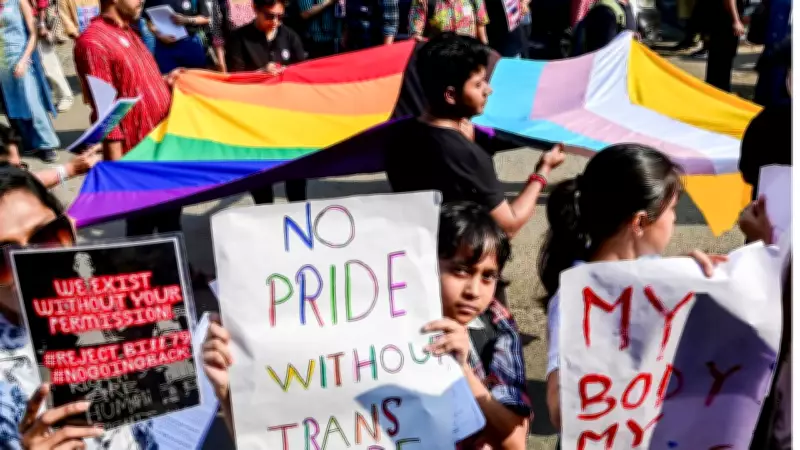
In a significant show of unity, opposition Members of Parliament and prominent transgender rights activists have jointly called for the immediate withdrawal of the Transgender Persons (Protection of Rights) Amendment Bill, 2026. The demand was forcefully articulated during a Jan Sunwai, or public discussion, held at the Press Club of India in New Delhi on Sunday.
Participants expressed deep concerns that the proposed legislative changes could substantially dilute the hard-won rights of the transgender community in India, potentially reversing years of progressive legal and social advancement.
Political Leaders Advocate for Parliamentary Scrutiny
NCP spokesperson Anish Gawande presented a clear alternative to withdrawal, stating to PTI, "If the government is not willing to withdraw the Bill, then it should be referred to the Standing Committee on Social Justice and Empowerment for thorough reconsideration." This sentiment was echoed by Congress leader Sandeep Dikshit, who emphasized the necessity of detailed parliamentary review.

Dikshit articulated a fundamental principle of governance, saying, "It is the responsibility of the state and the government to respect individuals for who they are. In our society, identity is often attacked repeatedly. The state and institutions must first treat every person as a human being, and then as a citizen."
He further elaborated on the state's duty, adding, "The duty of the state and Parliament is to respect individuals as they are—their identity, their choices, and their sense of self—and stand by them with dignity."
A Clash of Constitutional Values
RJD Rajya Sabha MP Manoj Jha framed the issue as a critical clash between constitutional morality and majoritarianism. He stressed that the government should be guided by constitutional values rather than numerical strength in Parliament. Jha called for a collective, cross-party strategy, urging, "We need to come together, both inside and outside Parliament, and build a coordinated strategy to oppose such measures."
Congress Rajya Sabha MP Renuka Chowdhury vowed continued resistance, declaring, "Even if the Bill is passed in Parliament, the fight will not end. We will continue to raise our voice and stand with the community. We are not going to be afraid. This is not an easy journey, but we have to fight it collectively."
Community Voices Warn of Regression
Transgender rights activist Grace Banu provided a poignant perspective from the community, highlighting a decades-long struggle for recognition and dignity. She warned that the proposed amendments risk undoing this progress. "For decades, we have been fighting to define our own identity. After years of struggle, self-identification was recognised, and now it is being taken away," Banu stated.
She also shed light on ongoing challenges, noting, "Even today, many in our community face abuse within families, social exclusion, and are pushed into marginalised livelihoods."
Details of the Controversial Bill
The Transgender Persons (Protection of Rights) Amendment Bill, 2026, was introduced in the Lok Sabha by Social Justice and Empowerment Minister Virendra Kumar on March 13. The Bill has several key provisions:
- It seeks to provide a precise legal definition of the term "transgender."
- It proposes a system of graded punishments based on the severity of harm inflicted on transgender persons.
- It explicitly states that a transgender person "shall not include, nor shall ever have been so included, persons with different sexual orientations and self-perceived sexual identities."
This proposed amendment to the 2019 Act has drawn sharp criticism from community members and allies. Critics argue that it departs from the foundational principles established by the Supreme Court in its landmark 2014 judgment in the National Legal Services Authority vs Union of India case, which affirmed the right to self-identification of gender.
The public discussion in New Delhi marks a pivotal moment of political and civil society alignment against the Bill, setting the stage for a potentially intense parliamentary debate on the future of transgender rights in India.