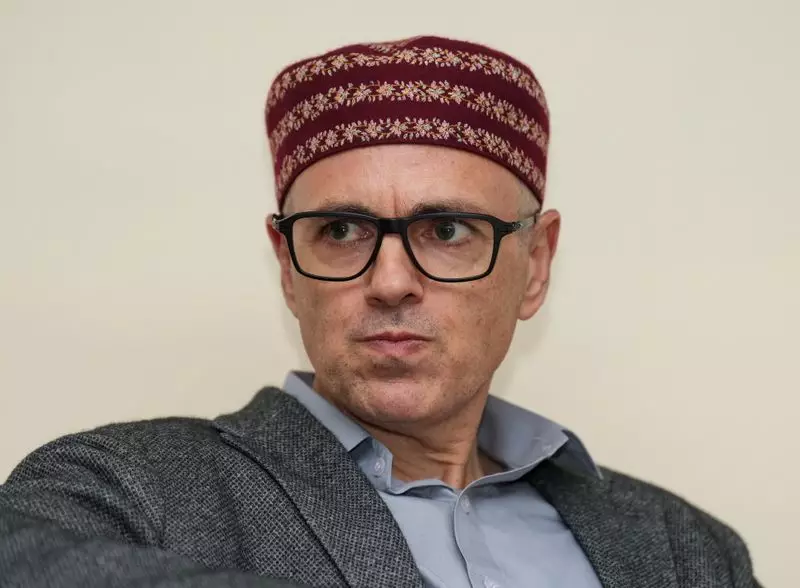
Former Jammu and Kashmir Chief Minister Omar Abdullah has ignited a fresh debate on India's ongoing hijab controversy by posing a pointed hypothetical question. Speaking at a public event, Abdullah challenged the perceived double standards in the political discourse surrounding religious attire.
A Provocative Parallel Drawn by the NC Leader
Addressing a gathering in Udhampur on Sunday, Omar Abdullah, the vice president of the National Conference (NC), delved into the sensitive issue. His comments came against the backdrop of the prolonged hijab ban controversy in educational institutions in Karnataka, which sparked nationwide debates and legal battles.
"What would have happened if a Muslim leader had touched the veil or 'ghunghat' of a Hindu woman?" Abdullah asked the audience rhetorically. He argued that the reaction would have been swift and severe, implying a disparity in how actions against symbols of different faiths are perceived and punished.

The senior politician emphasized that for Muslim women, the hijab is an integral part of their faith and identity, much like other religious garments. He expressed his dismay at the politicization of the issue, which he believes targets a specific community.
Context: The Karnataka Hijab Row
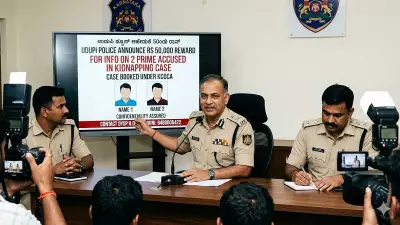
Abdullah's remarks are rooted in the events that began in early 2022 in Karnataka. The controversy erupted when a government pre-university college in Udupi barred several Muslim girls from attending classes while wearing the hijab. This led to widespread protests and counter-protests, eventually reaching the High Court and later the Supreme Court.
The Karnataka government, through an order, had mandated that uniforms prescribed by educational institutions or the state government must be followed, effectively restricting the wearing of hijabs in classrooms. The legal battle centered on the interpretation of essential religious practice and the right to freedom of expression versus the authority of educational institutions.
While the Karnataka High Court upheld the state government's order in March 2022, stating that the hijab was not an essential religious practice in Islam, the Supreme Court delivered a split verdict later that year, leaving the issue legally unresolved in many aspects.
Political Reactions and the Core of the Debate
Omar Abdullah's statement is seen as a direct critique of the Bharatiya Janata Party (BJP)-led governments and other groups that supported the hijab restriction. His analogy seeks to highlight what he views as a selective outrage and a differential treatment of religious symbols.
The core of his argument rests on the principle of equality and the right to religious freedom enshrined in the Indian Constitution. By invoking the imagery of a Hindu woman's 'ghunghat,' Abdullah attempts to frame the hijab not as an isolated issue but as part of a broader pattern where minority practices face disproportionate scrutiny.
Political observers note that such statements from prominent leaders of parties like the National Conference keep the debate on secularism and minority rights alive in the national political discourse. It also serves to consolidate the party's base in Jammu and Kashmir, where issues of identity and religious expression are deeply felt.
The incident underscores the ongoing tension in Indian society between uniform codes, educational discipline, and the fundamental rights to religion and expression. As the political narrative continues, statements like those from Omar Abdullah ensure that the hijab controversy remains a potent symbol in the larger debate on India's pluralistic fabric.