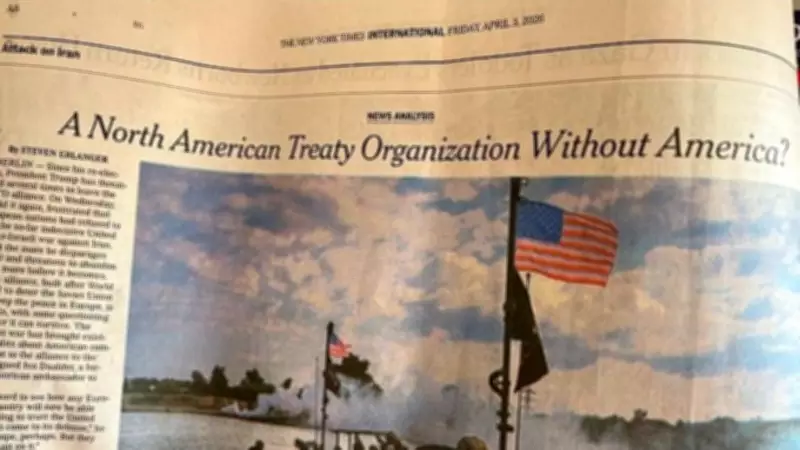
New York Times Issues Correction After Public Fact-Checking Exposes NATO Headline Error
The New York Times has been forced to issue a formal correction after social media users publicly fact-checked a significant error in one of its headlines. The incident has sparked widespread criticism of the publication's editorial processes and raised questions about the reliability of major news outlets in the fast-paced digital era.
Social Media Users Spot Major Mistake
The controversy began when the newspaper published an article on Friday about former President Donald Trump's threats to leave NATO. The headline incorrectly referred to the organization as the "North American Treaty Organization" instead of the correct "North Atlantic Treaty Organization." This was not merely a typographical error but represented a fundamental misunderstanding of the international alliance's identity.
Social media users quickly noticed the mistake and called out the publication. User @wheelsoliberty criticized the editorial team on X, stating, "Pathetic that your editorial team @nytimes completely missed this egregious error and that you had to be fact checked by the public at large." The user further accused the Times of posting the correction to an account with less viewership in what they described as a "fabricated attempt to be transparent."

Public Reaction and Criticism
Other users joined in the criticism, highlighting what they perceived as declining standards at the prestigious publication. @GringoElCamino commented, "It wasn't a typo. It was a complete misunderstanding of the organization. The writer had no idea." This sentiment was echoed by journalist Bhupendra Chaubey, who tweeted, "Hahaha. It seems the legendary times too has been hit by the AI bug."
The public fact-checking occurred rapidly across social media platforms, demonstrating how digital audiences now serve as immediate watchdogs for journalistic accuracy. This incident underscores the changing dynamics between traditional media institutions and their increasingly engaged readership.
Official Correction and Response
In response to the mounting criticism, the New York Times Communications account (@NYTimesPR) announced on April 3, 2026: "A correction will appear in tomorrow's print edition: 'A headline with an article on Friday about President Trump's threats to leave NATO misstated the full name of the body. It is the North Atlantic Treaty Organization, not the North American Treaty Organization.'"
The correction acknowledges the error but has done little to quell concerns about editorial oversight at one of the world's most influential newspapers. The incident raises important questions about fact-checking protocols and editorial review processes in contemporary journalism.
Broader Implications for Media Trust
This episode occurs against a backdrop of declining public trust in mainstream media institutions. Several factors contribute to this trend:
- Increased scrutiny: Social media enables immediate public fact-checking of published content
- Resource constraints: News organizations face pressure to publish quickly in competitive digital environments
- Quality control challenges: Maintaining editorial standards while adapting to new publishing formats
- Accountability expectations: Readers demand greater transparency from media organizations
The NATO headline error serves as a case study in how seemingly small mistakes can significantly impact institutional credibility. As news consumption increasingly moves to digital platforms, the relationship between media organizations and their audiences continues to evolve, with readers becoming active participants in the verification process.
This incident will likely prompt internal reviews at the New York Times and other major publications about how to balance speed with accuracy in today's media landscape. The public's role as fact-checker appears to be an established feature of modern journalism, creating both challenges and opportunities for traditional news organizations.