

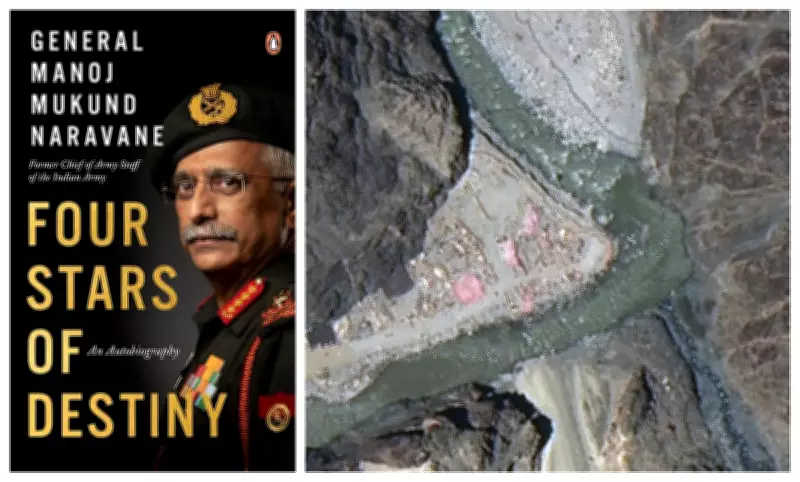
Unpublished Army Memoir Ignites Political Firestorm in Parliament
The Indian Parliament witnessed dramatic scenes on February 2, 2026, when Congress leader Rahul Gandhi attempted to read excerpts from former Army chief General M M Naravane's unpublished memoir during Lok Sabha proceedings. The unpublished book reportedly contains detailed accounts of the 2020 India-China border conflict in Ladakh's Galwan Valley, triggering immediate political controversy and parliamentary disruptions.
Parliamentary Proceedings Disrupted Over Military Revelations
Rahul Gandhi was repeatedly interrupted and ultimately prevented from reading the article based on General Naravane's unpublished manuscript. The Congress leader's reference to the memoir's contents about the Ladakh standoff created significant uproar in the House, with opposition and treasury benches engaging in heated exchanges over the matter.
The controversy centers around General Naravane's reported account of the military leadership's decision-making process during the tense border confrontation with China. The former Army chief's phrase 'Jo uchit samjho, woh karo' (Do what you deem appropriate) has become particularly contentious, with political interpretations varying widely across party lines.

Political Reactions and Social Media Amplification
The parliamentary incident quickly spilled onto social media platforms, where Rahul Gandhi's comments about the government's response to the China conflict gained traction. In a tweet that went viral, journalist Amrita Madhukalya quoted Gandhi stating: 'When China was at the door, then 56 inch was missing' - a pointed reference to Prime Minister Narendra Modi's previous political messaging.
The political storm has drawn reactions from multiple quarters:
- Defense Minister Rajnath Singh and government representatives defended the administration's handling of the Ladakh situation
- Opposition parties demanded greater transparency about the 2020 border conflict
- Military analysts expressed concern about operational details entering public discourse through unpublished manuscripts
- Constitutional experts debated parliamentary privilege versus national security considerations
Broader Implications for National Security Discourse
This incident raises significant questions about how sensitive military operations should be documented and discussed in public forums. General Naravane's unpublished memoir, while not officially released, has already influenced political narratives about one of India's most significant national security challenges in recent years.
The controversy highlights several critical issues:
- The balance between transparency and operational security in military matters
- The role of parliamentary privilege in discussing sensitive defense topics
- How unpublished materials can impact political discourse and public perception
- The ongoing political ramifications of the 2020 India-China border tensions
As the political debate continues, the incident underscores the complex intersection of military history, political accountability, and parliamentary democracy in contemporary India. The unpublished memoir's eventual publication, if it occurs, will likely generate further discussion about leadership decisions during critical national security moments.






