Gen Naravane's Memoir Unveils Critical LAC Moments Before August 2020 Clash
In his unpublished memoir, Four Stars of Destiny, former Army Chief General M M Naravane provides a detailed account of the escalating tensions along the Line of Actual Control (LAC) with China in eastern Ladakh. The book, which has sparked parliamentary debate after Leader of Opposition Rahul Gandhi was prevented from quoting it, reveals crucial conversations with Defence Minister Rajnath Singh on the night of August 31, 2020, when Chinese tanks advanced towards Rechin La.
The Unpublished Account of Border Tensions
General Naravane, who served as Army chief from 2019 to 2022, describes being handed a "hot potato" – referring to the critical military decision required in response to Chinese movements. This incident occurred during the prolonged military standoff that began in 2020 and continued until October 2024, when both nations formally agreed to disengage from all remaining friction points, including Depsang Plains and Demchok.
Escalation Before August 31: A Timeline of Events
The tensions began mounting towards the end of April 2020, following rapid Chinese troop mobilisation and infrastructure development along the LAC. India responded by deploying a strong contingent of troops and equipment. The situation soon turned violent:
- In early May 2020, clashes erupted at two points: the Naku La sector in Sikkim and near Pangong Tso lake in Ladakh.
- Several soldiers from both sides sustained injuries, with estimates suggesting over 70 Indian soldiers were injured in the Ladakh clash.
- These face-offs were resolved through local-level talks, though tensions remained high.
The first military Corps Commander-level talks took place on June 6, 2020, after weeks of continued troop buildups. However, the situation deteriorated dramatically with the Galwan Valley clashes on June 15, 2020, where 20 Indian soldiers, including Colonel B Santosh Babu, were killed. Chinese soldiers reportedly used crude weapons, and some estimates suggest over 40 Chinese casualties, though Beijing has not provided official details.
The Critical Night of August 31, 2020
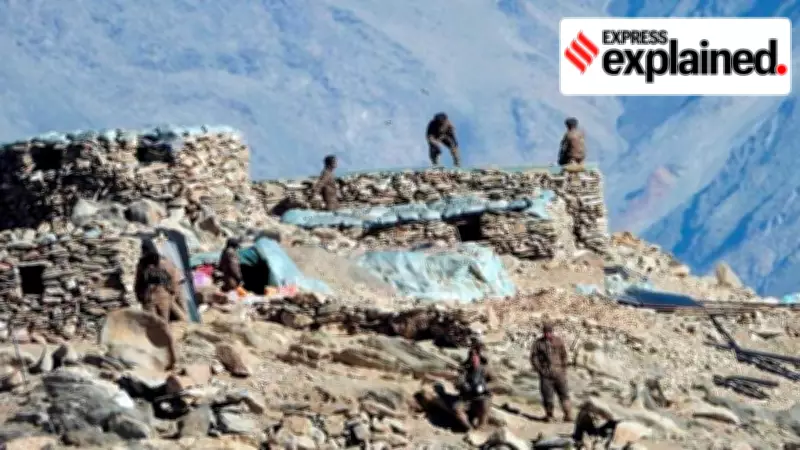
General Naravane's memoir provides an in-depth look at the events surrounding this pivotal date. On the night of August 29-30, India took control of dominant positions on key heights along the LAC at Rechin La, near Rezang La, on the south bank of Pangong Tso lake. This was a preemptive move after Chinese "provocative" military movements aimed at altering the status quo.
On August 31, as ground commanders discussed de-escalation, Chinese troops again engaged in provocative actions. General Naravane writes about receiving a worried call from Northern Command chief Lt Gen Y K Joshi at 2015 hours: "He reported that four tanks supported by infantry had slowly started moving up the track towards Rechin La... They had fired an illuminating round but this had had no effect. I had clear orders not to open fire, 'till cleared from the very top'."
Indian troops immediately issued warnings, and hotline exchanges followed, after which Chinese troops halted their advance.
Aftermath and Diplomatic Efforts
Following this incident, tensions continued along the LAC for months, with diplomatic-level talks and four rounds of Corps Commander-level talks between August 2020 and January 2021. The first breakthrough came in February 2021 when both sides agreed to disengage from the northern and southern banks of Pangong Tso. A 10th round of military talks took place after this process, though thousands of troops remained deployed along the LAC in eastern Ladakh.
General Naravane's account highlights the delicate balance between military readiness and diplomatic restraint during one of India's most challenging border confrontations in recent history. The memoir underscores the complex decision-making processes at the highest levels of India's defence establishment during moments of extreme tension.