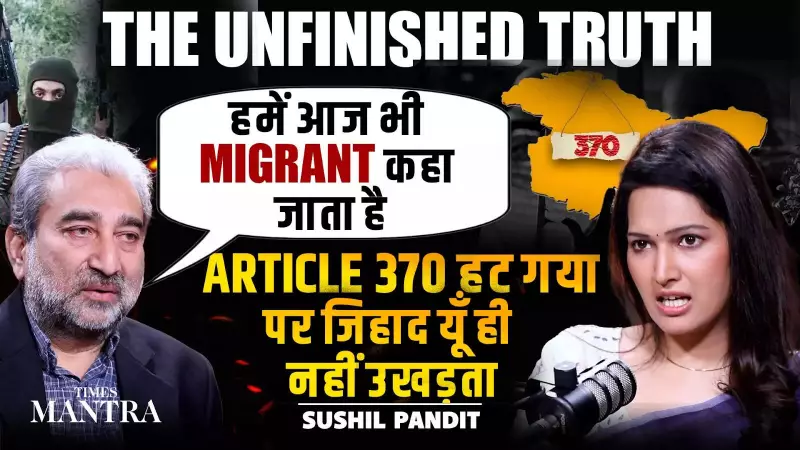
Why the 'Migrant' Label Endures Despite Article 370's Removal
The revocation of Article 370 in 2019 marked a significant constitutional shift for Jammu and Kashmir, yet for many individuals and communities, an old label persists: "migrant." This enduring reality underscores a profound truth—legal changes, while transformative on paper, often struggle to dismantle deep-seated social perceptions and historical identities overnight.
The Gap Between Legislation and Lived Experience
While the abrogation of Article 370 altered the region's political and administrative framework, it has not automatically erased the complex social fabric woven over decades. Identity, history, and community narratives frequently outlast legislative amendments, leaving many in a state of lingering uncertainty. This phenomenon highlights a critical disconnect between high-level political decisions and the nuanced realities on the ground.
For those still grappling with the migrant tag, the issue transcends mere legal status. It touches upon inclusion, acceptance, and belonging in a society where mindsets evolve slower than laws. The persistence of this label raises essential questions about the true impact of legal reforms and whether they can genuinely foster social harmony without complementary efforts in education, dialogue, and cultural integration.
Understanding the Unfinished Truth of Social Transformation
The situation serves as a stark reminder that change documented in statutes is merely the first step toward lasting transformation. Real progress requires addressing the psychological and social dimensions that laws alone cannot reach. Communities affected by such shifts often find themselves navigating a landscape where old identities clash with new legal realities, creating a sense of unfinished resolution.
This ongoing discussion emphasizes the need for a holistic approach to social policy—one that combines legal reforms with initiatives aimed at changing perceptions, healing historical divisions, and building inclusive communities. Without such efforts, the gap between law and life may continue to widen, undermining the potential for genuine unity and harmony.
Key Implications for India's Social Fabric
- Identity and Belonging: The migrant issue reflects broader challenges related to identity crises in post-conflict or transitional societies.
- Legal vs. Social Change: It illustrates how legal milestones, while necessary, are insufficient to alter deep-rooted social realities without parallel societal engagement.
- Inclusion Matters: The persistence of exclusionary labels underscores the urgent need for policies that promote acceptance and integration at the grassroots level.
- Mindset Evolution: Lasting transformation depends on evolving collective mindsets, which often lag behind legislative advancements.
In conclusion, the unfinished truth of Article 370's aftermath is a poignant lesson in the complexities of social engineering. It reminds us that while laws can redraw boundaries and redefine governance, the journey toward true social harmony requires patience, empathy, and a commitment to addressing the human elements that legislation alone cannot reach.